

Refine
Sort by
Base station
Suction power
Navigation
Battery life
Smart features
Colour
Brand
Customer rating
More like this


Dji Romo P
DJI
- 25,000 Pa powerful suction
- Drone-level obstacle sensing
- Self-cleaning base station
- Transparent design aesthetic
- 200-day maintenance-free operation

Ecovacs Deebot T30S Pro (Robot Vacuum Mop)
Ecovacs
- 11,000Pa suction power
- Hot water mop washing
- ZeroTangle anti-hair technology
- TruEdge edge mopping
- All-in-one OMNI station
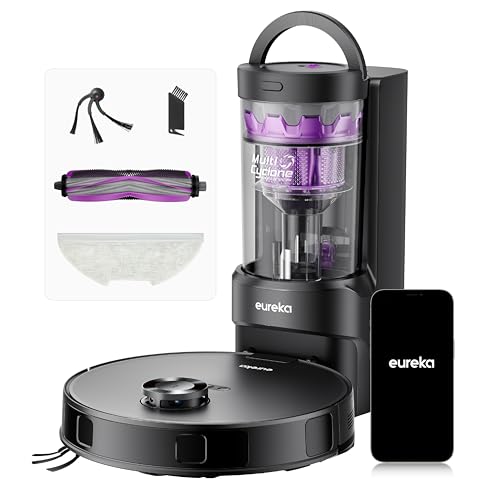
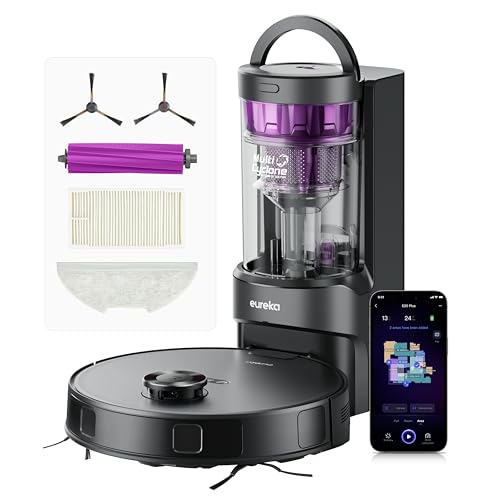
Eureka E20 Evo Plus
Eureka
- 10,000 Pa powerful suction
- Self-emptying 45-day capacity
- Vacuum and mop simultaneously
- 180-minute battery runtime
- LDS laser navigation mapping
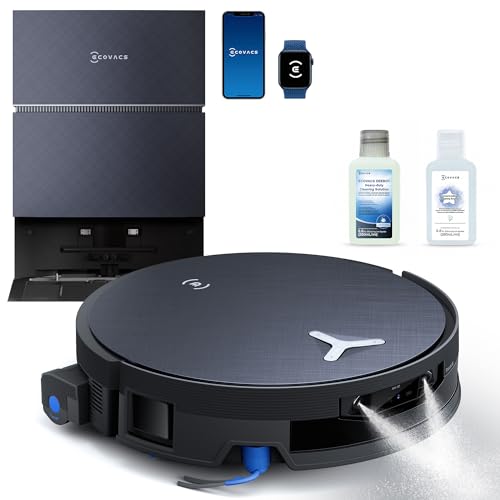
Ecovacs Deebot X12 Pro
Ecovacs
- OZMO Roller instant self-washing
- Bagless auto-empty station
- PowerBoost GaN charging
- AIVI 3D navigation
- 200 minute battery life

Eureka J15 Max Ultra robot vacuum
Eureka
- 22,000 Pa suction power
- Self-emptying base station
- Hot water mop washing
- FlexArm edge cleaning
- AI obstacle avoidance
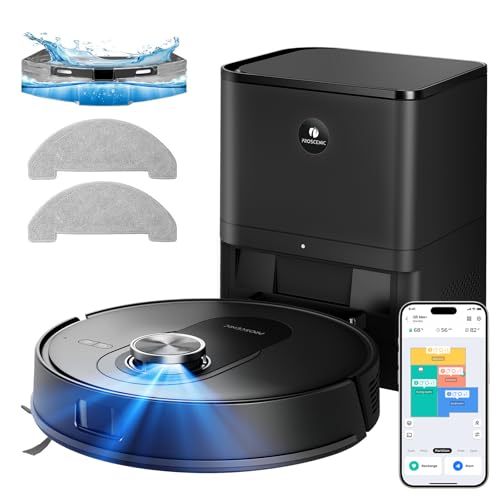
Proscenic Q8 Max+ Robot Vacuum And Mop (Black)
Proscenic
- 8000 Pa powerful suction
- Self-emptying 60 days
- 360° LiDAR navigation
- Vacuum and mop combo
- 200 minute battery life

Ecovacs Deebot T30S Combo
Ecovacs
- 11000Pa powerful suction
- ZeroTangle anti-hair technology
- Hot water mop washing
- Self-emptying dust collection
- Handheld vacuum included
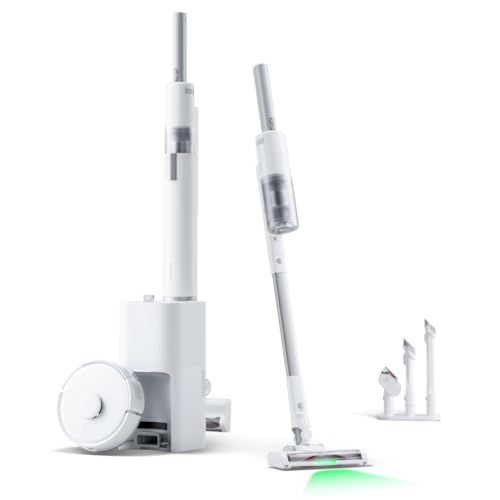
SwitchBot K10+ Pro Combo W3002500 (White)
SwitchBot
- 3-in-1 cleaning system
- 20,000Pa powerful suction
- Auto-empty dual dock
- D-ToF radar navigation
- Ultra-quiet 45dB operation

Eufy E25 Omni
Eufy
- 20,000 Pa turbo suction
- HydroJet mop system
- Auto-detangling brushes
- All-in-one base station
- 3-hour battery life

Lefant M5max
Lefant
- 23000Pa powerful suction
- 20cm wide roller mop
- 75°C hot water washing
- 120 days self-emptying
- Zero-tangle brush design

Roborock Qrevo Edge 2
Roborock
- 25,000 Pa powerful suction
- FlexiArm edge cleaning technology
- 80°C hot water washing
- 3.14" ultra-slim design
- Zero-tangle dual system

Ecovacs Deebot X12 Omnicyclone
Ecovacs
- 22,000Pa blast suction power
- Self-washing roller mop system
- Bagless auto-empty station
- FocusJet pre-spray technology
- ZeroTangle 4.0 hair prevention

Lefant Robot vacuum and mop
Lefant
- 12000Pa cyclonic suction power
- Self-emptying 3.2L dust bag
- Hot water mop washing
- 220-minute battery runtime
- 360° laser navigation mapping

Shark Stratos robot vacuum
Shark
- 30 days hands-free cleaning
- Sonic mopping technology
- 360° LiDAR navigation
- Self-cleaning brush roll
- HEPA filtration system

Lefant Robot vacuum cleaner
Lefant
- 18,000Pa powerful suction
- 20cm wide roller mop
- 75°C hot water washing
- 120 days hands-free cleaning
- dToF laser navigation mapping

Mova Mobius 60 MopSwap Robot Vacuum
Mova
- 30,000 Pa suction power
- Three interchangeable mops
- Crosses 8cm obstacles
- Hot water cleaning station
- HEPA filtration system

Shark Stratos robot vacuum
Shark
- 30 days hands-free cleaning
- Self-emptying NeverTouch base
- Sonic mopping technology
- 360° LiDAR mapping
- AutoLift carpet protection
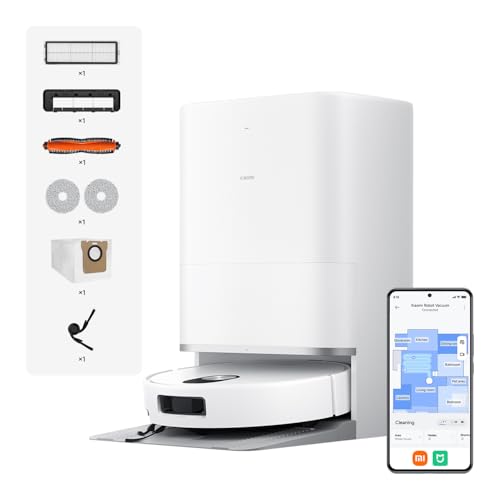
Xiaomi 5 Pro
Xiaomi
- 20,000Pa powerful suction
- AI obstacle recognition
- Self-cleaning base station
- 80°C hot water washing
- LiDAR navigation system

Ecovacs DEEBOT T50 PRO OMNI Gen 3
Ecovacs
- 15,000Pa powerful suction
- Ultra-slim 8.1cm design
- Self-cleaning mop station
- AI obstacle avoidance
- Auto-empty dustbin function

Eureka E20 Plus Robot Vacuum (Black, 35.1cm x 35.1cm)
Eureka
- Bagless self-emptying station
- 8000Pa powerful suction
- LiDAR navigation system
- Anti hair-tangling brush
- 2-in-1 vacuum mop
What does bagless mean on a robot vacuum mop?
The word is used in two ways, and it's worth knowing which one a listing means before you buy.
- A robot with no emptying dock. Every robot vacuum has an onboard bin, so a basic model that just returns to a charging pad is bagless by design. You tip the bin out yourself, usually after every run or two.
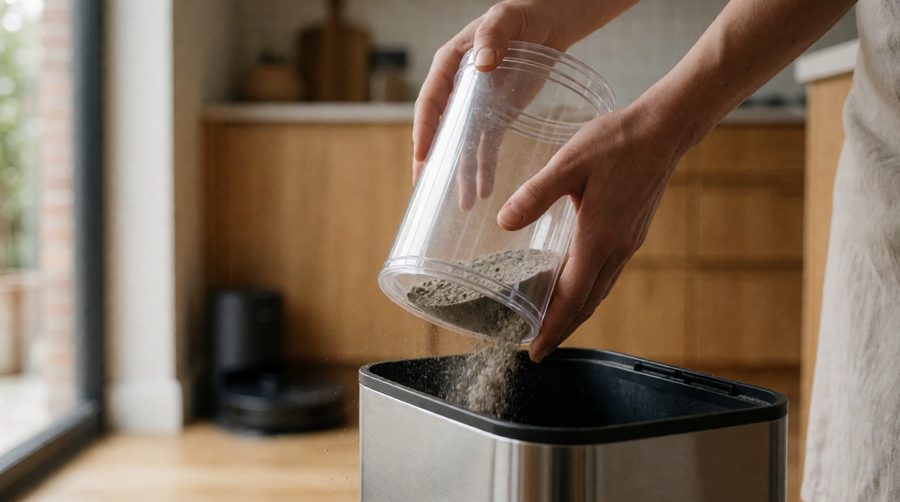
- A self-emptying robot with a bagless station. The dock sucks the dirt out of the robot's bin, but instead of a disposable bag it spins it into a clear cyclonic canister that you empty into the bin every month or two.
Both kinds sit side by side in this collection. The second is what most people searching for one actually want: hands-free emptying, with nothing to reorder. Bagged docks are still far more common, which is why this collection also carries some bagged-dock models for comparison; the table further down shows which is which.
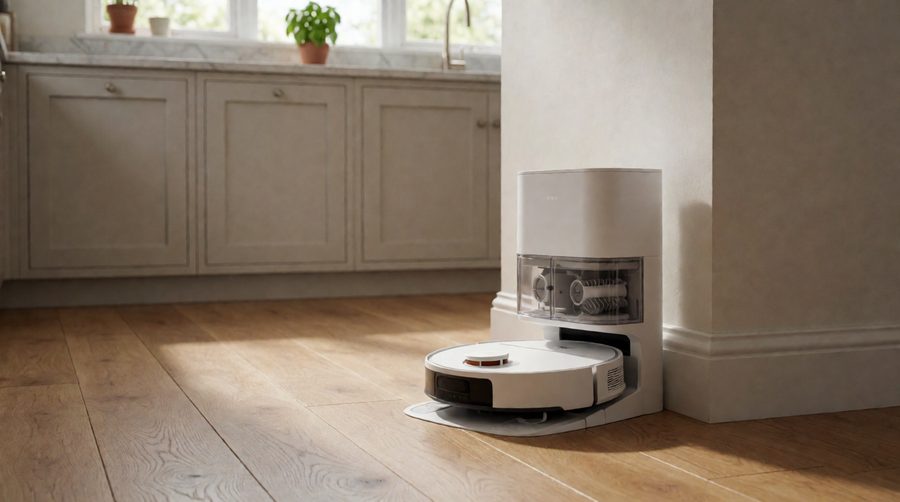
How a self-emptying canister station works
- The vacuum cleans and mops as normal, filling its own small bin, typically 200-450ml.
- It docks. A fan in the base opens a port under the vacuum and pulls the debris out in a few seconds.
- Instead of hitting a bag, the air spins through a cyclone. Heavy dust and hair drop into a clear canister, and the air passes through washable and HEPA filters before it leaves the base.
- You see the level through the clear plastic, unclip the canister and tip it into your household bin.
Eureka's E20 Plus and E20 Evo Plus use a 13-cone cyclone that separates up to 98% of the dust before the filters, and Ecovacs calls its version OmniCyclone. Shark's self-empty bases use a canister across the range and use an anti-allergen seal that the brand says traps 99.9% of dust and allergens inside.

Bagless vs bagged docks
Owners argue about this one more than anything else. On the r/RobotVacuums forum, a multi-pet owner who switched from a bagged Roborock to the Deebot X11 OmniCyclone said the bags kept clogging with dog hair and only lasted two weeks, while others point out that third-party bags are cheap. Here's the honest trade-off.
| Canister station | Bagged station | |
|---|---|---|
| Ongoing cost | No bags; filters to wash and eventually replace | Replacement bags, plus filters |
| Capacity | About 1.6-2 litres, 45-60 days | 2.5-4 litres, about 60-120 days |
| Emptying | Tip a clear canister into the bin; a little dust escapes | Lift out a bag that seals itself |
| Long pet hair | Less prone to clogging; you can see a blockage | Hair can catch in the bag's narrow opening |
| Allergies | Rinse filters outdoors or wear a mask | Better - the dust stays sealed in |
| Examples in this collection | Shark Matrix Plus, Eureka E20 Plus, Ecovacs X12 OmniCyclone | Tapo RV30 Max Plus, Eufy E25 Omni, Dreame L50 Ultra |
If allergies are the deciding factor, a sealed bag is the cleaner option and our auto empty robot vacuums cover those. If you'd rather never buy a consumable, and you have pets shedding long hair, a cyclonic station makes more sense.
Bagless models compared
We pulled these figures from the specs of the products in this collection. Days between empties are the makers' own and assume a typical home.
| Model | Dust handling | Days between empties* | Suction | Run time |
|---|---|---|---|---|
| Ecovacs Deebot X12 OmniCyclone | Cyclonic canister, 1.6 litres | Up to 48 | 22,000Pa | 200 mins |
| Ecovacs Deebot X11 OmniCyclone | Cyclonic canister | Not listed | 19,500Pa | 200 mins |
| Eureka E20 Evo Plus | Cyclonic canister, 2 litres | 45 | 10,000Pa | 180 mins |
| Eureka E20 Plus | Cyclonic canister | 45 | 8,000Pa | 180 mins |
| Eureka E10s | Cyclonic canister, 2 litres | 45 | 4,000Pa | Up to 3 hours |
| Shark Matrix Plus 2-in-1 | Canister base | 60 | Not listed | Not listed |
| Shark PowerDetect 2-in-1 | Canister base | 60 | Not listed | 110 mins |
| Shark Stratos 2-in-1 | Canister base | 60 | Not listed | 110 mins |
| Honiture G20 | Onboard bin, 450ml | Empty by hand | 7,000Pa | 120 mins |
| Vipsun Q10S | 2-in-1 dust and water tank | Empty by hand | 4,000Pa | 150 mins |
| Kilgone G20 | Onboard bin, 200ml | Empty by hand | Not listed | 120 mins |
| iRobot Roomba Combo j5 | Onboard bin | Empty by hand | Not listed | 180 mins |
*Manufacturer figures from the listings and, for the X12, Ecovacs UK. Pets, carpets and daily runs shorten them.
The pattern is clear. Canister stations hold less than bagged ones, 45-60 days against up to 100-120 for the biggest bagged docks, because a cyclone needs room to spin. In return you get no consumables and, at the top end, the same flagship suction: the X12 OmniCyclone's 22,000Pa sits alongside bagged rivals. The dock-free vacuum and mop 2-in-1s are much cheaper but you'll be emptying a 200-450ml bin almost daily in a home with pets.
Choosing a bagless robot vacuum and mop
Station or no station?
A small flat with hard floors and no pets can manage with a dock-free model and a quick bin tip after each run; our budget robot mops and small robot mops are full of them. Bigger homes, carpets or a shedding dog are where a self-emptying station earns its place.

Mopping system
The mop matters as much as the bin. Basic vacuum mops drag a damp pad behind them from a 200-250ml tank, which freshens hard floors but won't shift dried marks. Shark's sonic mopping scrubs the pad back and forth, while the Ecovacs X12 uses a rolling mop (OZMO Roller) that is rinsed as it turns. Premium models also lift the mop by about 10mm when they reach a rug. For sealed wood, tile and vinyl, see our robot mops for hard floors.
Water and mop care at the dock
Dirt and water are separate jobs. A dust canister says nothing about the water side, so check whether the dock also refills the clean tank and collects the dirty water, and whether it washes and dries the pads. The Ecovacs OmniCyclone stations do all of that, and the X11 washes the mop with 75°C water; the Shark and Eureka docks in this range only empty dust, and you fill and wipe the mop yourself. Our robot mops with a dirty water tank and all-in-one robot mop stations go further.
Suction and floors
For hard floors and short rugs, 4,000-8,000Pa is plenty. Deeper carpets and pet hair benefit from 10,000Pa and above plus a rubber or anti-tangle roller, like the Eureka's V-shaped roller or Ecovacs ZeroTangle.
Height and navigation
Measure under your sofa first. The Honiture G20 and Vipsun Q10S are 7.6cm tall, the Roomba Combo j5 8.6cm and the Eureka E20 models 9.7cm, as their laser turret adds height. Shark and Eureka use LiDAR mapping; cheaper dock-free vacuums tend to clean in a set zig-zag pattern without a saved map. See our smart mapping robots if room-by-room control matters.
Noise
The emptying burst is the loud part. Shark lists its PowerDetect at 55-60dB while cleaning and 70-75dB for the few seconds it empties, and Ecovacs lists the X12 at 61.1dB. Set quiet hours in the app, or browse our quiet robot vacuums and mops.
Are bagless robot vacuum mops better for pet hair?
Often, yes. Long hair is what clogs bagged docks: it bunches at the narrow neck of the bag and blocks the suction path. A cyclonic canister has a wider path and you can see straight away if something is stuck. You will rinse filters more often in a pet home, and you'll still cut hair off the main brush now and then. For more models picked with dogs and cats in mind, see our robot vacuum mops for pet hair.
Is a bagless robot vacuum mop worth it?
For most homes with a mix of carpet and hard floor, yes. A robot vacuum that mops as well replaces two daily chores, and a canister station means you can schedule it every day without thinking about the bin for weeks. It is most worthwhile if you:
- have a dog or cat and are tired of bags clogging with hair;
- would rather not keep buying a consumable that only fits one brand;
- want the vacuum to run while you're at work and empty itself;
- have mostly hard floors that need a quick mop between proper cleans.
It's less worthwhile if someone at home has severe allergies (a sealed bag is cleaner) or if you live in a small flat where a cheap dock-free vacuum and mop does the job and the onboard bin lasts several runs. And no robot replaces a full-size vacuum for stairs, sofas and deep corners; most owners keep one for a weekly once-over.
Looking after your robot vacuum and its canister
- Empty the canister when it reaches the line, outdoors or straight into a bin bag to keep dust down.
- Rinse washable filters in cold water every few weeks and let them dry fully - 24 hours is safe - before refitting. A damp filter goes musty and cuts suction.
- Replace the HEPA filter as the maker suggests; it can't be washed on most models.
- Clear the dock's intake port and the vacuum's bin outlet of hair and fluff.
- Wash the mop pads on a warm cycle if the dock doesn't, and empty and rinse the water tank after each mop.
- Cut tangled hair off the brush roll and side brushes every week or two.
Prefer as little of this as possible? Our low maintenance robot mops focus on it.
Which brands make them?
Shark uses canister self-empty bases throughout its robot range, from the vacuum-only Navigator and Matrix to the 2-in-1 Matrix Plus, PowerDetect and Stratos; see our Shark robot vacuum mops. Eureka sells the E10s, E20 Plus and E20 Evo Plus with transparent cyclonic docks. Ecovacs brought cyclonic emptying to its flagship all-in-one stations with the Deebot X12 OmniCyclone and X11 OmniCyclone; our Ecovacs robot mops list the wider range. iRobot, Roborock, Dreame, Eufy and Tapo mostly use bagged docks.
Allergies, batteries and recycling
Emptying a canister releases a little dust, so if anyone at home has asthma or a dust mite allergy, empty it outside and look for a HEPA filter; the NHS advice on allergic rhinitis covers reducing dust at home. These vacuums run on lithium-ion batteries: charge only on the supplied dock and stop using one that swells or overheats - the London Fire Brigade lithium battery guide lists the warning signs. At the end of its life, take the vacuum and base to an electrical recycling point; Recycle Your Electricals has a postcode finder.
Bagless robot vacuum mop FAQs
Are all robot vacuums bagless?
The vacuums themselves are: each one has a small bin. "Bagged" only describes the self-emptying dock, where most brands use a disposable bag and Shark, Eureka and Ecovacs OmniCyclone use a canister.
How often do you empty the canister?
About every 45-60 days going by maker figures, sooner with pets or daily runs. The clear canister lets you check at a glance.
Does the robot vacuum lose suction as the canister fills?
The cyclone keeps most dust off the filters, so suction holds up well, but a clogged or damp filter will cut it. Rinse and dry the filters regularly.
Can a bagless robot vacuum and mop at the same time?
Most here do, in a single pass, and the better ones lift the mop when they detect carpet. A few, such as the Eureka E10s and the Shark Navigator and Matrix, vacuum only, so check the listing says 2-in-1.
Is it cheaper to run than a bagged vacuum?
Usually, since there are no bags, though you'll replace filters more often. Over a few years the saving is modest; the bigger reasons to choose one are less clogging and nothing to reorder.
Does the robot vacuum need Wi-Fi?
Most start from a button or remote, but maps, schedules and no-mop zones need the app. For voice control, see our Alexa robot mops.