

Refine
Sort by
Suction power
Navigation
Battery life
Smart features
Colour
Brand
Customer rating
More like this

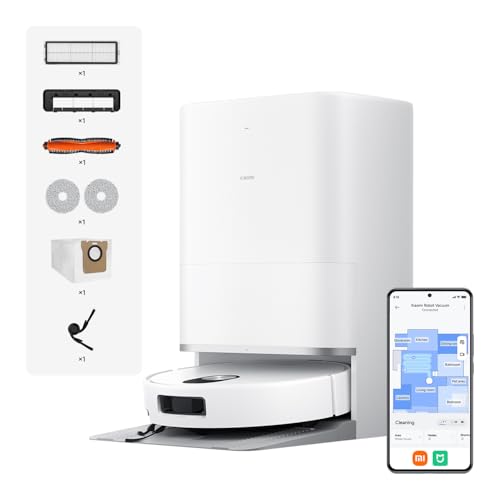

Ecovacs Deebot T30S Pro (Robot Vacuum Mop)
Ecovacs
- 11,000Pa suction power
- Hot water mop washing
- ZeroTangle anti-hair technology
- TruEdge edge mopping
- All-in-one OMNI station
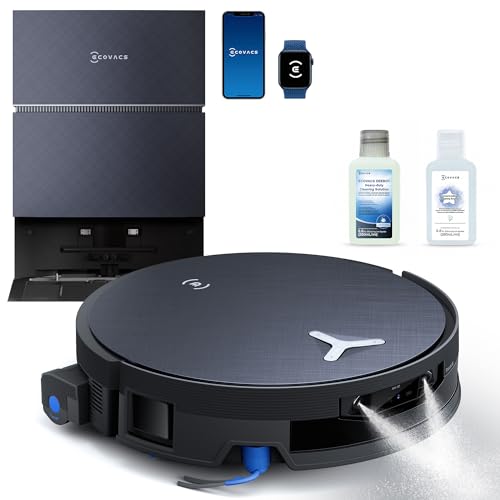
Ecovacs Deebot X12 Pro
Ecovacs
- OZMO Roller instant self-washing
- Bagless auto-empty station
- PowerBoost GaN charging
- AIVI 3D navigation
- 200 minute battery life

Eureka J15 Max Ultra robot vacuum
Eureka
- 22,000 Pa suction power
- Self-emptying base station
- Hot water mop washing
- FlexArm edge cleaning
- AI obstacle avoidance

Ecovacs Deebot T30S Combo
Ecovacs
- 11000Pa powerful suction
- ZeroTangle anti-hair technology
- Hot water mop washing
- Self-emptying dust collection
- Handheld vacuum included

Roborock Qrevo Edge 2
Roborock
- 25,000 Pa powerful suction
- FlexiArm edge cleaning technology
- 80°C hot water washing
- 3.14" ultra-slim design
- Zero-tangle dual system

Ecovacs Deebot X12 Omnicyclone
Ecovacs
- 22,000Pa blast suction power
- Self-washing roller mop system
- Bagless auto-empty station
- FocusJet pre-spray technology
- ZeroTangle 4.0 hair prevention

Ecovacs DEEBOT T50 PRO OMNI Gen 3
Ecovacs
- 15,000Pa powerful suction
- Ultra-slim 8.1cm design
- Self-cleaning mop station
- AI obstacle avoidance
- Auto-empty dustbin function

Ecovacs Deebot X11 OmniCyclone
Ecovacs
- 19,500Pa BLAST suction power
- Bagless auto-empty station
- OZMO ROLLER 2.0 mopping
- PowerBoost 3-minute charging
- ZeroTangle anti-hair wrap
What does a hot water robot vacuum mop actually do?
The heat is in the dock, not on the floor. Each robot vacuum here vacuums first and then starts mopping, using a little water from its onboard tank. When it goes back to its base station - part-way through a big clean and again at the end - the base pumps fresh water through a heater, scrubs the pads or roller in it, drains the grey water into a separate tank and blows hot air over the pads until they are dry.
That matters because the mop pad is the dirtiest part of the whole machine. A cold rinse shifts loose dirt, but kitchen grease, sticky drinks and muddy paw prints cling on, and a damp pad shut in a warm dock soon smells. Heat dissolves grease far better than a cold rinse, and a proper dry stops mould and odour getting a foothold before the next run.
- Wash: the dock heats fresh water (70-80°C on the robots below) and scrubs the pads against a ribbed tray.
- Collect: the grey water goes into its own tank, never back into the clean one.
- Dry: warm air at 45-63°C dries the pads in place.
- Refill and empty: the base tops up the robot and sucks the dust out of its bin - all of these are self-emptying.
Hot water mop washing temperatures compared
These figures come from the listings of the robots in stock in this range today. Fahrenheit figures have been converted to Celsius.
| Model | Wash | Warm air dry | Suction power | Run time | Navigation | Mop type |
|---|---|---|---|---|---|---|
| Roborock Qrevo Edge 2 | 80°C | 55°C | 25,000 Pa | - | dToF, 280+ objects | Twin rotating pads |
| Eureka J15 Max Ultra | 80°C | 55°C | 22,000 Pa | 360 min | LiDAR + AI camera | Rotating pads, extending arm |
| X12 OmniCyclone | Up to 75°C | 63°C | 22,000 Pa | 200 min | AIVI 3D 4.0 | Roller 3.0 |
| X11 OmniCyclone | 75°C | 63°C | 19,500 Pa | 200 min | AIVI 3D + LiDAR | Roller 2.0 |
| T50 Pro Omni Gen 3 | 75°C | 45°C | - | - | AIVI 3D 3.0 | Rotating pads |
| T30S Pro | 70°C | Yes | 11,000 Pa | 180 min | AIVI 3D | Rotating pads |
| T30S Combo Complete | 70°C | Yes | 11,000 Pa | 180 min | TrueDetect 3D | Pads + handheld vacuum cleaner |
Two things stand out. The Roborock and Eureka docks run hottest at 80°C, while the Deebot range sits at 70-75°C but dries warmer, at up to 63°C. And the two roller models rinse the roller continuously as they go, so cleaner water reaches the tiles between dock visits - worth having if you mop large areas in one go. Dreame's L30 Ultra (58°C) and the Mova V50 Ultra (80°C) also belong here but are out of stock at the time of writing.
Does a hotter dock mean a cleaner mop?
Up to a point. The NHS's uniforms and workwear guidance says a ten-minute wash at 60°C removes almost all micro-organisms from fabric, which is why 60°C is a sensible minimum to look for. Every robot in the table clears it on paper.
Real-world numbers are lower than the box claims, though. When Vacuum Wars measured mop dock temperatures with a laser thermometer, most docks landed within a few degrees of each other whatever the advertised figure. Roborock's flagship Saros Z70 recorded the hottest water, the X11 - rated lowest at 75°C - came second, and the Dreame Aqua10 Ultra Roller, which claims boiling water, finished third alongside the Shark PowerDetect ThermaCharged. The Mova Z60 Ultra trailed well behind its claim.
So treat 70°C and 80°C as roughly equal in practice and judge the station on the whole cleaning cycle: how hard it scrubs, whether it soaks stubborn stains and how well it dries.
Why the dry matters as much as the wash
A clean pad that sits wet in a closed dock overnight will still smell by morning, so look for heated air rather than an unheated fan. The X11 and X12 dry at 63°C, the Roborock and Eureka at 55°C and the T50 at 45°C. Most apps let you set how long the dry runs, so a longer cycle after a big kitchen clean is easy to schedule.
Warm water on the floor vs hot water in the dock
A handful of newer robots now take heated water out of the dock too. The Narwal Flow, for example, feeds its track mop with 45°C water from the robot itself. Warm water helps lift sticky spills, but it cools quickly once it is spread thinly over tiles, and no robot puts down anything close to the 70-80°C a dock reaches.
If you want real heat where you walk - for sanitising grout or a utility room - a steam mop is the tool for the job, and our robot steam mops page explains what is on offer. Day to day, a hot-washed pad plus a dab of cleaning solution does the job; robots that dose it automatically are in our robot mops that use cleaning solution range.
Vacuuming, navigation and obstacle avoidance
A hot water robot vacuum is still a robot vacuum cleaner first, and a good mopping dock can't make up for weak vacuuming. Suction power runs from 11,000 Pa on the T30S models to 25,000 Pa on the Roborock Qrevo Edge 2. For navigation, the Eureka pairs LiDAR with an AI camera that recognises 150+ object types, the Qrevo uses a retractable dToF sensor and spots 280+ objects, and the Deebots use AIVI 3D obstacle avoidance to steer round cables, socks and pet bowls.
Each one maps your home in its app, so you can set no-mop zones round rugs, pick room-by-room cleaning and schedule a vacuum and mopping run while you're out. The T30S Combo Complete even comes with a handheld vacuum cleaner for stairs and the car.
Is a hot water mop safe for every floor?
Yes. The pads are washed hot but are only damp and close to room temperature by the time they touch the floor, so sealed wood, laminate, vinyl and stone are all fine. What matters more is how much water the robot puts down and whether it lifts its pads near rugs.
- Wood: pick a low water setting. Our robot mops for hardwood floors lists models with fine water control.
- Tiles and grout: hot-washed pads stop grime building up in grout lines. See our robot mops for tile floors.
- Laminate and LVT: avoid puddles at the joints - compare robot mops for laminate floors and robots for vinyl plank flooring.
- Carpet: these robots lift their pads on carpet - the X11 uses a Triple Lift System to raise its roller.
How to choose hot water robot vacuum mops
- Wash temperature: 60°C or more, with a soak or deep-wash mode if you cook a lot.
- Drying: heated air, ideally with a dry time you can change in the app.
- Roller or rotating pads: rollers rinse themselves as they go; rotating pads press harder (the Roborock and Eureka both quote 8N) and swing out to the edges.
- Dust bag or bagless: the X11 and X12 docks are bagless; others use a bag for 65-75 days. Our auto empty robot vacuums page compares both.
- Dock size: the X11 is listed at 35 x 53.3 x 40.5cm, the Roborock dock at 48.7 x 52.1 x 34cm. Measure the gap under the worktop or beside the fridge first.
- Pet hair: anti-tangle brushes such as ZeroTangle matter more than suction figures. See our robot vacuum and mops for pet hair.
Rotating pads or a roller mop?
Rotating pads are the most common design and handle dried-on spills well because they spin with downward pressure. A roller covers a wider strip, is rinsed with clean water as it turns and leaves fewer streaks on large hard floors. Both get the same hot wash back at the dock.
Which hot water robot vacuum to buy
- Best all-rounder: Roborock Qrevo Edge 2 - 80°C wash, soaking mode and the most suction here.
- Biggest homes: Eureka J15 Max Ultra - 360 minutes per charge and 80°C washing.
- Fewest streaks: Deebot X12 - roller mop, FocusJet pre-spray and a bagless dock.
- Best value: T30S Pro - 70°C washing with the full self-cleaning dock.
- Extra cleaning jobs: T30S Combo Complete - adds a handheld vacuum cleaner.
Looking after the dock
A self-cleaning station saves almost all the work, but not all of it. Empty and rinse the grey water tank every few runs, wipe the washing tray weekly and check the air vent for fluff. In hard water areas, scale builds up in the heater, so use the descaling cycle or tablets the maker recommends. If you want a bigger waste tank, our robot mop with dirty water tank range shows the options. For the top-end docks with every extra, browse our premium robot mops.
FAQ
Can you put hot water in a robot vacuum?
No. Fill the clean tank with cold tap water and let the dock heat it. Roborock's manuals, for example, warn that hot water can deform the tank, and most brands say the same.
What temperature do hot water robot mops wash at?
Between 70°C and 80°C in this range: 80°C for the Roborock Qrevo Edge 2 and Eureka J15 Max Ultra, 75°C for the X11, X12 and T50, and 70°C for the T30S models. The warm air dry runs at 45-63°C.
Do hot water mop docks kill bacteria?
Washing fabric at 60°C or above removes almost all micro-organisms, and every dock here is rated above that. Measured temperatures are usually a little lower than the claims, so let the pads dry fully and replace them as the maker advises.
Is a hot water robot mop the same as a steam mop?
No. The heat is used to clean the pads in the dock; the floor itself is mopped with damp, near room-temperature pads. A steam mop puts heat directly where you walk.
Are hot water robot vacuum mops worth the extra?
If you mop a kitchen or a pet's area more than once a week, yes: pads stay fresh, you never handle them and you avoid a film of old dirt. For a hallway mopped once a fortnight, a cold-rinse dock is enough.
Current models and full specs are on the Ecovacs UK and Roborock UK websites.