

Refine
Sort by
Base station
Suction power
Navigation
Battery life
Smart features
Colour
Brand
Customer rating
More like this

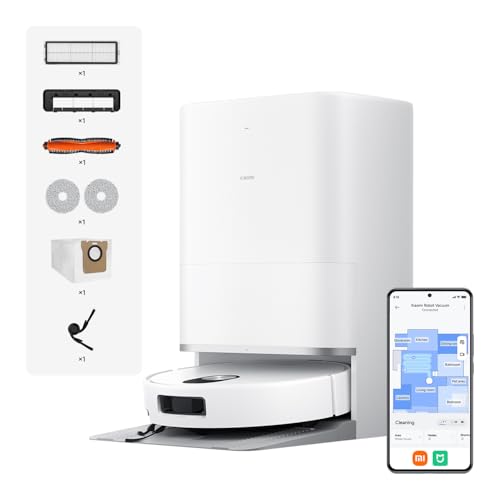


Dji Romo P
DJI
- 25,000 Pa powerful suction
- Drone-level obstacle sensing
- Self-cleaning base station
- Transparent design aesthetic
- 200-day maintenance-free operation

Ecovacs Deebot T30S Pro (Robot Vacuum Mop)
Ecovacs
- 11,000Pa suction power
- Hot water mop washing
- ZeroTangle anti-hair technology
- TruEdge edge mopping
- All-in-one OMNI station
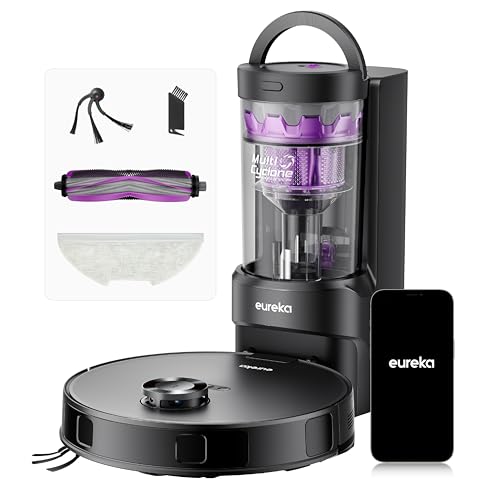
Eureka E20 Evo Plus
Eureka
- 10,000 Pa powerful suction
- Self-emptying 45-day capacity
- Vacuum and mop simultaneously
- 180-minute battery runtime
- LDS laser navigation mapping

Olsen & Smith Smart robot vacuum cleaner
Olsen & Smith
- 10000Pa powerful suction
- Self-emptying base station
- Vacuum and mop combo
- Laser navigation mapping
- Voice control compatible
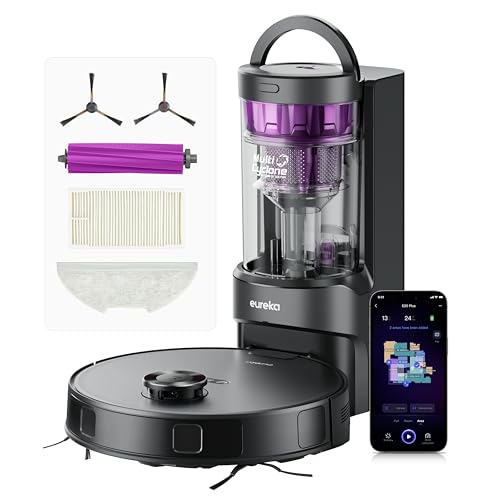
Eureka E20 Plus Robot Vacuum Cleaner (Black, 35cm x 35cm)
Eureka
- 8000Pa powerful suction
- 45-day self-emptying station
- 10mm mop lifting
- 180-minute battery life
- AI obstacle avoidance

Eureka Eureka E20 Plus Robot Vacuum
Eureka
- 8000Pa powerful suction
- 45-day self-emptying station
- AI 3D obstacle avoidance
- 180-minute battery life
- Vacuum and mop function

Eureka J15 Max Ultra robot vacuum
Eureka
- 22,000 Pa suction power
- Self-emptying base station
- Hot water mop washing
- FlexArm edge cleaning
- AI obstacle avoidance
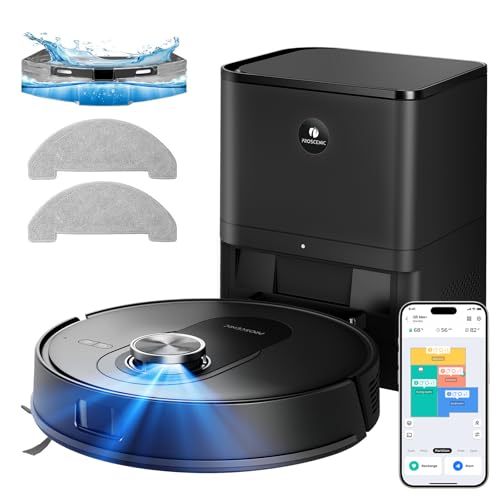
Proscenic Q8 Max+ Robot Vacuum And Mop (Black)
Proscenic
- 8000 Pa powerful suction
- Self-emptying 60 days
- 360° LiDAR navigation
- Vacuum and mop combo
- 200 minute battery life

Xiaomi Robot Vacuum Cleaner
Xiaomi
- 1800Pa powerful suction
- LDS smart mapping
- 2.5 hour battery life
- App control functionality
- Obstacle climbing capability
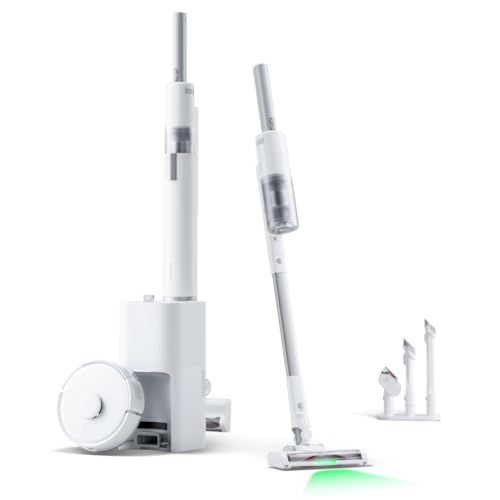
SwitchBot K10+ Pro Combo W3002500 (White)
SwitchBot
- 3-in-1 cleaning system
- 20,000Pa powerful suction
- Auto-empty dual dock
- D-ToF radar navigation
- Ultra-quiet 45dB operation

HONITURE G20 PRO (Black, 3-in-1 Robot Vacuum and Mop)
HONITURE
- 4500Pa ultra-strong suction power
- 3-in-1 sweep vacuum mop
- 150 minutes battery runtime
- Smart Z-shaped navigation system
- Auto carpet boost detection

Eufy E25 Omni
Eufy
- 20,000 Pa turbo suction
- HydroJet mop system
- Auto-detangling brushes
- All-in-one base station
- 3-hour battery life

Tapo Robot Vacuum
Tapo
- 4200Pa hyper suction power
- 3-hour continuous cleaning battery
- LiDAR navigation mapping system
- 800ml large dust capacity
- Voice and app control

Ecovacs Deebot T50 Pro Omni (White)
Ecovacs
- 15,000Pa powerful suction
- TruEdge 2.0 edge cleaning
- OMNI station auto-cleaning
- AIVI 3D navigation
- ZeroTangle 2.0 technology

Shark Stratos robot vacuum
Shark
- 30 days hands-free cleaning
- Sonic mopping technology
- 360° LiDAR navigation
- Self-cleaning brush roll
- HEPA filtration system

Lefant Robot vacuum cleaner
Lefant
- 18,000Pa powerful suction
- 20cm wide roller mop
- 75°C hot water washing
- 120 days hands-free cleaning
- dToF laser navigation mapping

Mova Mobius 60 MopSwap Robot Vacuum
Mova
- 30,000 Pa suction power
- Three interchangeable mops
- Crosses 8cm obstacles
- Hot water cleaning station
- HEPA filtration system

Shark Stratos robot vacuum
Shark
- 30 days hands-free cleaning
- Self-emptying NeverTouch base
- Sonic mopping technology
- 360° LiDAR mapping
- AutoLift carpet protection

Samsung Jet Bot Combo+ VR7MD96514G (Misty White, 3-in-1)
Samsung
- 3-in-1 vacuum and mop
- Self-emptying Clean Station
- Steam mop sanitisation
- AI object recognition
- SmartThings app control

Ecovacs Deebot T50 Pro Omni (Black)
Ecovacs
- 15,000Pa powerful suction
- Ultra-slim 3.19" design
- Self-emptying omni station
- AI obstacle avoidance
- TruEdge corner cleaning
What counts as a mid-range robot vacuum and mop?
There is no official definition, but in the UK the middle of the market runs from roughly £300 to £700. Below that you are in budget territory; above about £800 you are paying for flagship extras. Prices on Amazon move a lot with Prime Day and Black Friday, so a model that launched as a flagship often drops into this price band within a year, which is one reason this tier is such good value.
What matters more than the price tag is the feature set. A mid-range robot vacuum and mop should map your home with a laser, let you clean room by room from an app, lift or remove its pads when it reaches carpet, and come with a dock that does at least some of the dirty work. Independent testers such as Vacuum Wars now describe this band as the point where value peaks, because LiDAR, self-emptying docks and decent obstacle avoidance have all moved down from the top end.
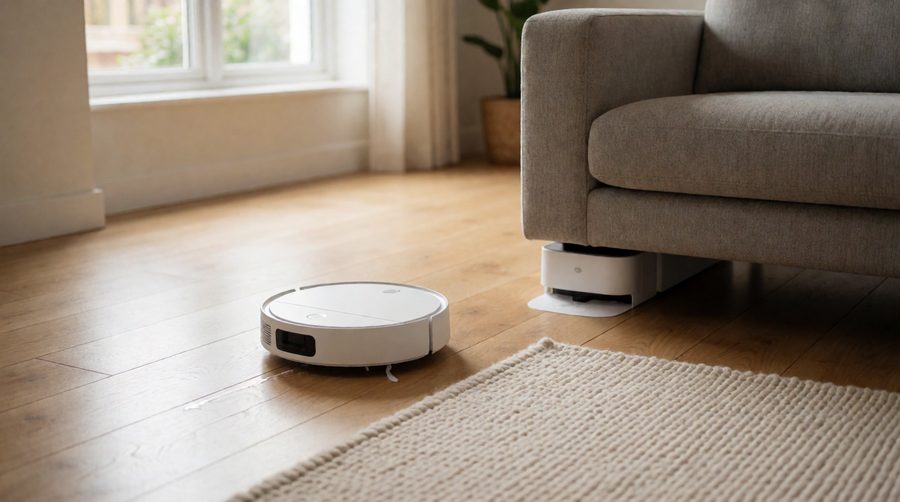
Budget vs mid-range vs premium robot vacuums: what you get
The jump from budget to mid-range is the biggest step up in day-to-day use. The jump from mid-range to premium is mostly about convenience and the last few per cent of cleaning performance. This is how the tiers typically compare:
| Budget (under ~£300) | Mid-range (~£300-£700) | Premium (£800+) | |
|---|---|---|---|
| Navigation | Gyroscope or basic LiDAR, simple maps | LiDAR or dToF with room-by-room maps, no-go zones, multi-floor maps | LiDAR plus cameras and AI, retractable turrets |
| Obstacle avoidance | Bump sensors, a few cliff sensors | Structured light or 3D sensors that spot cables, socks and pet bowls | Camera recognition of hundreds of objects, pet waste detection |
| Mopping | Damp cloth dragged behind | Spinning pads or a roller mop, pad lifting on carpet | Extending pads for corners, pad swapping, higher pad pressure |
| Dock | Charging only, or a basic auto-empty bin | Auto-empty; often washes the pads in hot water and dries them with hot air | All of that plus auto detergent, plumbed-in water options |
| Thresholds | Around 1.5cm | About 2cm | Some climb 4cm or more with lifting chassis |
In short, a cheap robot vacuum cleans well enough but needs more babysitting: you tidy the floor first, empty the bin after each run and rinse the cloth by hand. This middle tier removes most of that. Premium machines remove the rest, adding pads that swing out into corners, robotic arms that pick up socks and legs that step over tall door bars.
Mid-range robot vacuum and mop models compared
These are some of the best-reviewed robot vacuums in our range, with specifications taken from the listings. Suction is quoted in pascals (Pa), and the rating is the Amazon average with the number of reviews in brackets. Tap a name for full specs.
| Model | Suction | Run time | Navigation | Mopping and dock | Amazon rating |
|---|---|---|---|---|---|
| Narwal Freo X Plus | 7,800Pa | - | LiDAR + tri-laser | Self-emptying, up to 7 weeks | 4.0 (472) |
| Ecovacs Deebot T50 Pro Omni | 15,000Pa | - | AIVI 3D 3.0, 8.1cm tall | 75°C pad wash, hot air drying, auto-empty | 4.4 (2,102) |
| Eufy X10 Pro Omni | 8,000Pa | 180 min | LiDAR + AI | 1kg pad pressure, 12mm pad lift, 3L water tank | 4.0 (132) |
| Eureka J15 Pro Ultra | 16,200Pa | 100 min | 150 obstacle types | 75°C wash, 55°C drying, 12mm pad lift | 4.2 (425) |
| Samsung Jet Bot Combo+ | - | 3 hours | LiDAR | Steam mop washing, 55°C drying, 2L dust | 4.3 (24) |
| Lefant M5 Pro | 18,000Pa | Up to 180 min mopping | dToF laser | 20cm roller mop, 75°C wash, climbs 2cm | 4.3 (1,670) |
| Shark PowerDetect Robot Vacuum and Mop | - | 110 min | 3D 360° LiDAR | Sonic mopping, 60-day self-empty, climbs 2cm | 4.1 (255) |
| Eufy Omni E25 | 20,000Pa | 180 min | Laser + AI, 200+ obstacles | Roller mop, 3L dust bag (about 75 days) | 4.4 (4,430) |
| Xiaomi Robot Vacuum 5 Pro | 20,000Pa | 120 min | Lifting dToF laser | 80°C pad wash, 4L water tank, crosses 20mm | 4.2 (22) |
A few things stand out. Suction has climbed quickly: 15,000-20,000Pa is now common at this level, compared with the 2,000-4,000Pa many robot vacuums offered a few years ago. Hot water mop washing at 75-80°C, once a premium feature, appears on several models here. And the best-reviewed machines are not always the strongest on paper; the Eufy Omni E25 and Ecovacs T50 Pro Omni both have thousands of reviews because they get the basics right.
Robot vacuum features worth paying for
LiDAR or dToF navigation
A spinning laser (LiDAR) or a direct time-of-flight sensor (dToF) builds an accurate floor plan on the first run. From there you can name rooms, set no-go zones round the dog bowls, clean the kitchen after dinner and save maps for more than one floor. It also means the robot cleans in neat lines and finishes the house on one charge. If maps matter most to you, our smart mapping robot vacuums are all laser-guided.
Obstacle avoidance
This is where mid-range models vary most. Basic 3D or structured-light sensors steer round cables, socks and chair legs; better systems recognise more than 100 object types (the Eureka J15 Pro Ultra lists 150, the Eufy Omni E25 over 200). If you have children, pets or charging cables on the floor, it is worth paying for. Our obstacle avoidance robot vacuums focus on exactly that.
Suction power and brushes
Suction power is quoted in pascals (Pa). Treat it as a rough guide rather than a score: how the robot vacuum uses that power on carpet, and the design of the brush, matter as much as the headline figure. In this band 8,000Pa is plenty for hard floors and short-pile carpet, while 15,000-20,000Pa models such as the Ecovacs T50 Pro Omni and Eufy Omni E25 pull more grit out of deeper carpet and rugs. For pet hair, look for a rubber or anti-tangle main brush and a side brush that doesn't wrap long hair round itself; untangling a bristle brush every few days soon gets tiresome. Edge cleaning is the weak spot of most round robots, so check the corner and edge figures too. The Eureka J15 Pro Ultra claims 98.95% edge coverage, and the Ecovacs T50 Pro Omni pushes its mop to within 1mm of the skirting.
The mop system
Three designs dominate. Twin spinning mop pads press down and scrub, and most models at this price use mop lifting to raise them 10-12mm when they detect carpet. Roller mops, like the one on the Lefant M5 Pro or Eufy Omni E25, are washed continuously as they turn, so they push less dirty water around. Sonic or vibrating plates, as on the Shark PowerDetect, scrub quickly but with less pressure. A spinning mop with real downward pressure (the Eufy X10 Pro Omni applies 1kg) is what shifts dried-on marks on a hard floor; a lighter mop pad mostly picks up dust. For sticky kitchen floors, rollers and pressurised spinning pads do better than a simple damp cloth.
The dock
A self-emptying base station sucks the robot's bin into a bag or container that lasts weeks: up to 7 weeks on the Narwal Freo X Plus and around 75 days on the Eufy Omni E25. All-in-one docks also wash the pads in hot water, dry it with warm air so it doesn't smell, and refill the robot's water tank. See our self-emptying robot vacuum and mops and hot water mop washing models if that's the priority.
Height, battery life and thresholds
Check the robot vacuum's height against the gap under your sofa and beds. The Ecovacs T50 Pro Omni is 8.1cm tall; many LiDAR robots are nearer 10cm. A battery life of 100-180 minutes covers most homes in one go, and the robot will recharge and resume if it doesn't. Most robot vacuums at this level climb door thresholds of about 2cm; if you have taller bars, look at our robot vacuums that climb thresholds.
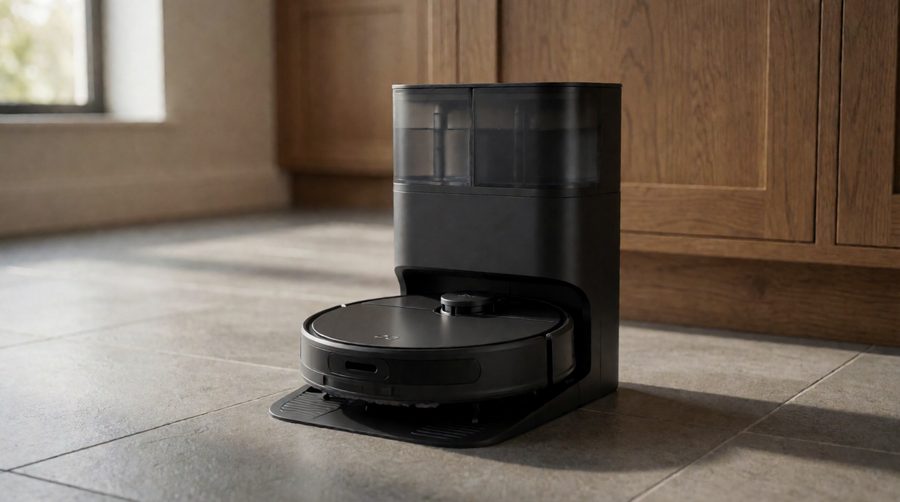
Which mid-range robot vacuum and mop suits your home?
- Mostly hard floors and tiles: prioritise mopping. A roller or pressurised spinning pads with hot water washing will make the biggest difference. Our robot mops for tile floors narrow it down.
- Pets: look for a rubber anti-tangle brush, high suction and good obstacle avoidance. The Eureka J15 Pro Ultra quotes 99% hair tangle prevention. Browse our robot vacuum and mops for pet hair.
- Lots of rugs and carpet: pick a model that lifts its pads at least 10mm, or one with a roller that stays clear of carpets, and set carpet boost in the app.
- Larger homes: look for 150 minutes or more of run time and multi-floor mapping. Our long battery life robot vacuums cover the longest runners.
- Flats and bedrooms: check the noise figure; the Shark PowerDetect lists 55-60dB while cleaning. See our quiet robot vacuum and mops.
Brands to look at in this price band
The same few names turn up in every UK test, and most of them sell at least one model at this price:
- Ecovacs: the Deebot T-series (T50 Pro Omni, T80 Omni) brings hot water washing and a slim 8.1cm body to the band. See all our Ecovacs robot mops.
- Eufy: the X10 Pro Omni and Omni E25 are among the best-reviewed robot vacuum and mop combos on Amazon UK, and Expert Reviews currently rates the E25 its best overall robot vacuum.
- Dreame and Roborock: best known for flagships such as the Dreame X50 Ultra and Roborock Saros, but both sell cheaper lines, such as the Dreame D20 Air Plus, that sit near or inside this band.
- Shark and Samsung: the Shark PowerDetect self-emptying models and the Samsung Jet Bot Combo+ suit buyers who prefer a familiar UK brand with high-street service.
- Narwal, Eureka, Lefant, Xiaomi and Mova: newer or value-led brands that often put more suction and dock features in at a lower price, though spare parts can be harder to find.
- iRobot: older Roomba Combo j-series models now sell in this range, but their Amazon ratings (3.6) trail the newer LiDAR robots above.
When to spend less, and when to spend more
Step down to a budget robot vacuum if your home is small, mostly one room type and fairly clutter-free, and you don't mind emptying a bin and rinsing a cloth. A good cheap robot vacuum still keeps on top of daily dust.
Step up to a premium robot vacuum if you have a large house with deep corners, high door bars or a lot of floor clutter, or you want the robot to run almost without you touching it for months. Features like extending pads, automatic detergent dosing and camera-based recognition of pet mess are where the extra money goes. For most households, though, a mid-range robot vacuum and mop does most of what a flagship does at around half the price.

Quick buying checklist
Before you add a robot vacuum and mop to your basket, run through these points. A good model at this price should tick most of them.
- Suction power: 8,000Pa or more for mixed floors; 15,000Pa or more if most of your home is carpet.
- Navigation: LiDAR or dToF laser navigation, with saved multi-floor maps and room-by-room cleaning in the app.
- Obstacle avoidance: 3D or camera-based, so it steers round cables, socks and pet bowls.
- Mop lifting: pads that lift at least 10mm, or a roller that keeps clear of rugs.
- Base station: self-emptying at minimum; mop washing and hot air drying if you have a lot of hard floor.
- Battery life: a run time of 150 minutes or more for a larger home, with recharge and resume.
- Thresholds and height: climbs your door bars (most manage 2cm) and fits under your sofa.
- Spare parts: dust bags, mop pads and filters easy to buy in the UK at a fair price.
Setting up your new robot vacuum and mop
A little time on day one makes a big difference to how well it cleans for the next few years.
- Put the base station against a wall with about 50cm clear on each side and 1m in front, or follow the gaps in the manual, so the robot can dock cleanly.
- Let it do a mapping run with doors open and the floor tidy, then name the rooms and fix any wrong room divisions in the app.
- Add no-go zones around pet bowls, deep-pile rugs and tangles of cables, and no-mop zones for any carpet the robot doesn't detect.
- Set suction and water levels per room: more water for the kitchen, less for wooden floors, carpet boost for the lounge.
- Schedule runs for when you're out. A daily vacuum and two or three mopping runs a week keep most homes on top of dust and pet hair.
Running costs and maintenance
The price of the robot vacuum isn't the whole story, and running costs vary a lot between brands. Self-emptying docks use disposable dust bags, and mopping pads, side brushes, main brushes and filters all wear out. Budget for a replacement kit once or twice a year, and check that the parts are easy to buy in the UK before you choose a lesser-known brand. To keep it working well:
- Cut hair off the brush and empty the dirty water tank every week or two, even if the dock washes the pads.
- Rinse or replace the filter as the manual says; a clogged filter cuts suction quickly.
- Wipe the cliff sensors and LiDAR window now and then so navigation stays accurate.
- Clean the base station's washing tray once a month; dirty water and hair collect there.
- Use only the brand's own floor cleaner in the tank, as other products can foam or block the water lines.
When it finally reaches the end of its life, don't put it in the bin. Robot vacuums contain lithium-ion batteries, so use an electrical recycling point; Recycle Your Electricals has a postcode finder.
App, Wi-Fi and security
Almost every robot vacuum at this price is controlled through an app and works with Alexa or Google Assistant. The app is where most of the value is: it shows the map, lets you name rooms and set no-go and no-mop zones, choose suction and water levels per room, schedule runs for when you're out and see when the dust bag or filter needs changing. Check reviews of the app as well as the robot, because a clumsy app makes a good machine frustrating. Since April 2024 the UK's product security regime has banned universal default passwords on connected products and requires brands to say how long they will provide security updates. Robot vacuums with cameras deserve extra care: follow the NCSC advice on smart devices in the home, set a strong password and install updates. If you want independent lab results before you buy, Which? tests robot vacuum cleaners too.
Mid-range robot vacuum and mop FAQs
How much should I spend on a robot vacuum and mop?
For most homes, £300-£700 is the right range. It gets you laser mapping, carpet detection and usually a self-emptying or mop-washing dock. Under £300 works for small, simple homes; over £800 mainly buys convenience.
Is a mid-range robot vacuum worth it over a budget one?
Usually, yes. Accurate mapping, pads that lift on carpet and a dock that empties the bin save you more time each week than almost anything else, and those are the features budget models tend to lack.
Will it mop as well as a premium robot vacuum?
On everyday dirt they come close, especially roller mops and spinning pads with hot water washing. Premium models still do better along skirting boards and in corners thanks to extending pads.
Can a mid-range robot vacuum and mop clean carpets?
Yes. Suction of 8,000Pa or more handles short and medium pile well, and the robot vacuum raises or removes its pads before it drives onto carpet. Very deep shag rugs are still best set as no-go zones.
How long does the battery last?
Most robot vacuums in this band run for 100-180 minutes on a charge, enough for a typical three- or four-bedroom house. If the battery runs low, the robot docks, recharges and finishes the job.
Do I have to empty it?
With a self-emptying dock, only the dock bag, every few weeks to a couple of months. Without one, you empty the robot vacuum's small bin after most runs. You'll still need to top up the clean water and empty the dirty water tank on mopping models unless the dock is plumbed in.