

Refine
Sort by
Base station
Suction power
Navigation
Battery life
Smart features
Colour
Brand
Customer rating
More like this


Dji Romo P
DJI
- 25,000 Pa powerful suction
- Drone-level obstacle sensing
- Self-cleaning base station
- Transparent design aesthetic
- 200-day maintenance-free operation

Ecovacs Deebot T30S Pro (Robot Vacuum Mop)
Ecovacs
- 11,000Pa suction power
- Hot water mop washing
- ZeroTangle anti-hair technology
- TruEdge edge mopping
- All-in-one OMNI station
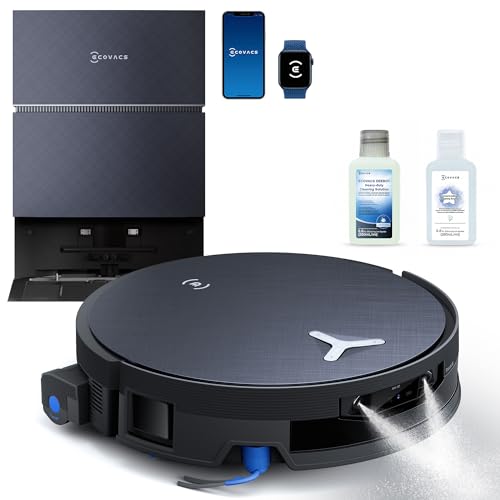
Ecovacs Deebot X12 Pro
Ecovacs
- OZMO Roller instant self-washing
- Bagless auto-empty station
- PowerBoost GaN charging
- AIVI 3D navigation
- 200 minute battery life
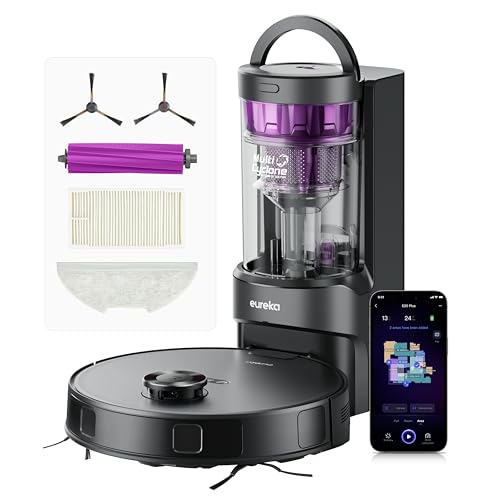
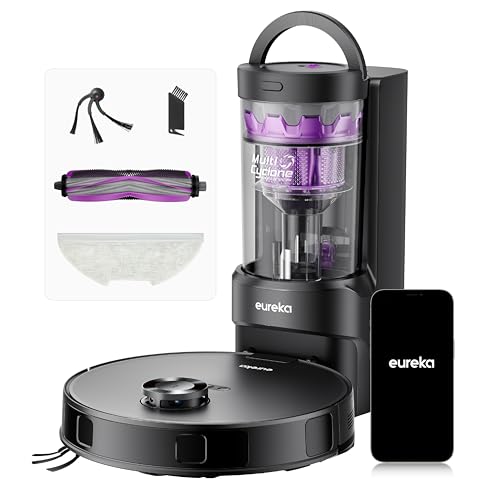
Eureka E20 Plus Robot Vacuum Cleaner (Black, 35cm x 35cm)
Eureka
- 8000Pa powerful suction
- 45-day self-emptying station
- 10mm mop lifting
- 180-minute battery life
- AI obstacle avoidance

Eureka Eureka E20 Plus Robot Vacuum
Eureka
- 8000Pa powerful suction
- 45-day self-emptying station
- AI 3D obstacle avoidance
- 180-minute battery life
- Vacuum and mop function
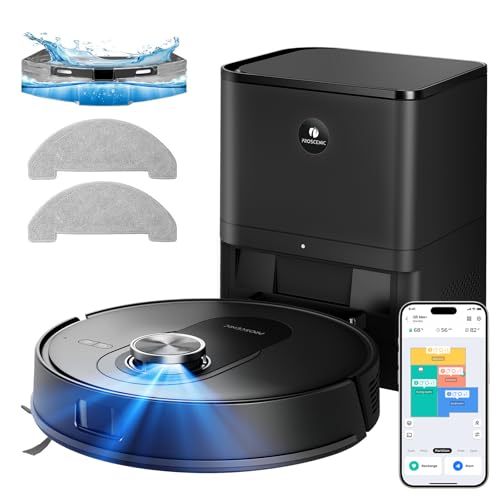
Proscenic Q8 Max+ Robot Vacuum And Mop (Black)
Proscenic
- 8000 Pa powerful suction
- Self-emptying 60 days
- 360° LiDAR navigation
- Vacuum and mop combo
- 200 minute battery life

Ecovacs Deebot T30S Combo
Ecovacs
- 11000Pa powerful suction
- ZeroTangle anti-hair technology
- Hot water mop washing
- Self-emptying dust collection
- Handheld vacuum included

Ecovacs Deebot X12 Omnicyclone
Ecovacs
- 22,000Pa blast suction power
- Self-washing roller mop system
- Bagless auto-empty station
- FocusJet pre-spray technology
- ZeroTangle 4.0 hair prevention

Lefant Robot vacuum cleaner
Lefant
- 18,000Pa powerful suction
- 20cm wide roller mop
- 75°C hot water washing
- 120 days hands-free cleaning
- dToF laser navigation mapping

Ecovacs DEEBOT T50 PRO OMNI Gen 3
Ecovacs
- 15,000Pa powerful suction
- Ultra-slim 8.1cm design
- Self-cleaning mop station
- AI obstacle avoidance
- Auto-empty dustbin function

Eureka Eureka J15 Pro Ultra Robot Vacuum Cleaner
Eureka
- 16,200Pa powerful suction
- Self-cleaning base station
- Hot water mop washing
- AI obstacle avoidance
- FlexiRazor anti-hair tangling

Shark PowerDetect Robot Vacuum And Mop (White, 60-Day Self-Emptying)
Shark
- 60-day self-emptying capacity
- 3D LiDAR vision mapping
- Sonic mopping technology
- PowerDetect cleaning sensors
- Anti-allergen complete seal

Narwal Freo X Plus Robot Vacuum And Mop (White)
Narwal
- 7800Pa powerful suction
- Seven weeks dust storage
- Zero tangle brush design
- Self-emptying dustbin technology
- Tri-laser obstacle avoidance

Dreame X50 Ultra
Dreame
- 20,000Pa Vormax suction power
- Retractable legs climb 2.36in
- VersaLift lowers to 3.5in
- DuoBrush anti-tangle system
- Auto-empty self-cleaning base

Ecovacs Deebot X11 OmniCyclone
Ecovacs
- 19,500Pa BLAST suction power
- Bagless auto-empty station
- OZMO ROLLER 2.0 mopping
- PowerBoost 3-minute charging
- ZeroTangle anti-hair wrap

Irobot Roomba Combo 10 Max
iRobot
- 4-stage cleaning system
- AutoWash dock included
- SmartScrub mopping technology
- Auto-retract mop system
- Advanced obstacle avoidance
What makes the best robot mops for large areas different?
Almost any robot vacuum mop will clean a one-bedroom flat. A big house is a different job. The robot mop has to keep going for two or three hours, carry enough water for every hard floor, keep its mop pads clean so it isn't smearing dirt from the kitchen into the hallway, and find its way across several rooms and floors without getting lost or stuck. Those four things decide which are the best robot mops for a big floor plan, far more than headline suction figures.
For a sense of scale, the government's English Housing Survey found the average home had 94m² of usable floor space, a detached house 149m² and a semi 97m². Usable floor area includes stairs and the space under walls, so the floor a cleaner actually covers is smaller, but a detached home with an open-plan ground floor can easily have 100m² or more to wash on each level.
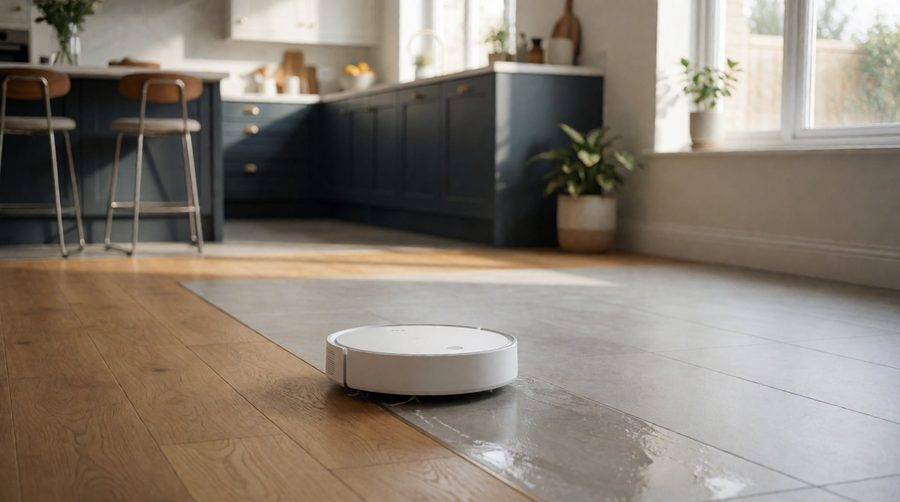
How much floor can one charge cover?
Most manufacturers quote runtime in minutes, not floor area, which is exactly the problem many buyers run into. A rough way to judge it is to compare the runtime with the size of your home. PCMag's testers treat 60 minutes as enough for small homes and flats and like to see around 90 minutes; for a big house you want more headroom than that, because mopping uses more power than vacuuming alone, and maximum quoted runtimes are measured on the lowest setting.
A few listings do give coverage. The Proscenic Q8 Max+ in this collection quotes 230m² from a 200-minute runtime, and PCMag says the iRobot Braava Jet m6 covers up to 1,000 sq ft (about 93m²) per charge. As a rule of thumb, aim for:
- Up to 80m² of hard floor: 100-120 minutes is usually plenty.
- 80-150m²: look for 150-180 minutes.
- 150m² and above, or several floors: 180-220 minutes plus recharge and resume.
Recharge and resume
This feature matters more than raw battery size. When the charge runs low, the cleaner goes back to its dock, tops up just enough to finish, then returns to the exact spot it left. With it, even a 110-minute robot mop can finish a big house; without it, you come home to half a clean floor. It also lets the dock rinse the mop pads mid-job, which keeps the second half of the house as clean as the first.
Our large-area picks compared
These figures come from the product listings in this collection, so you can compare like with like. Runtime is the maximum quoted, usually on the lowest power setting.
| Model | Max runtime | Suction | Mop system | Climbing / lifting |
|---|---|---|---|---|
| Ecovacs Deebot X12 OmniCyclone | 200 min | 22,000Pa | OZMO Roller 3.0 | - |
| Ecovacs Deebot X12 Pro Omni | 200 min | BLAST suction | OZMO Roller 2.0 | - |
| Ecovacs Deebot X11 OmniCyclone | 200 min | 19,500Pa | Hot water (167F) mop washing | Thresholds to 0.9in (about 2.3cm) |
| Proscenic Q8 Max+ | 200 min (230m²) | 8,000Pa | Mop lifts on carpet | 5 floor maps |
| Dreame X50 Ultra | 180 min | 20,000Pa | Self-cleaning base | Obstacles to 2.36in (6cm) |
| Eureka E20 Plus | 180 min | 8,000Pa | Vacuums and mops together | 20mm thresholds, 10mm mop lift |
| Ecovacs Deebot T30S Pro | 180 min | 11,000Pa | 70C hot-water washing | Auto mop lifting |
| Lefant M5 Pro | 320 min (vacuum) / 180 min (both) | 18,000Pa | 20cm roller, fresh water feed | Thresholds to 2cm |
| Shark PowerDetect (self-emptying) | 110 min | PowerDetect, 5 sensors | Sonic vibrating mop | Thresholds to 2cm |
| Eureka J15 Pro Ultra | 100 min | 16,200Pa | 75C mop washing, 7N pressure | 12mm mop lift |
The pattern is clear: the 200-minute Ecovacs X-series machines and the Proscenic lead on stamina, while the Shark and Eureka J15 rely on recharge and resume to finish bigger homes. The DJI Romo P (25,000Pa, a self-cleaning base with mop washing and drying, extendable arms for edges) is also listed for large multi-room homes, though its listing doesn't give a runtime.
Which is best for you?
- Best for stamina: the Ecovacs Deebot X12 OmniCyclone, with 200 minutes and 22,000Pa, for the biggest single floors.
- Best for multi-floor homes: the Proscenic Q8 Max+, which saves five floor maps and quotes 230m² per charge.
- Best for tiled kitchens and hallways: the Lefant M5 Pro, whose 20cm roller gets fresh water throughout the run.
- Best for thresholds and steps: the Dreame X50 Ultra, which climbs obstacles up to 6cm.
- Best for quieter living spaces: the Shark PowerDetect, listed at 55-60dB while cleaning.
How to choose a robot mop for a big home
Battery and runtime
The best robot mop for your home has a runtime that covers your whole floor on a medium setting, not the maximum. Battery capacity helps you compare: the Eureka E20 Plus has 5,200mAh and the Ecovacs T30S Pro 6,400mAh, both rated for 180 minutes. If you want the longest-lasting options in one place, our long-lasting battery models are grouped together.
Base station and water
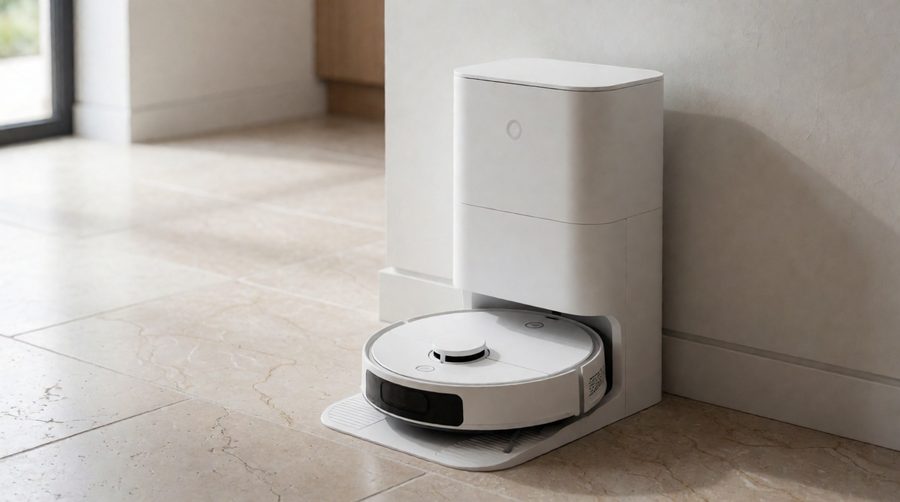
On a big floor plan the dock does most of the hard work. A full "omni" style station empties the dust, rinses the mop pads, refills the onboard water from a clean tank and stores the dirty water separately. That means fewer trips for you and cleaner pads for the robot. Check the dust storage figure too: the Narwal Freo X Plus quotes seven weeks, the Shark 60 days and the Lefant up to 120 days. Our all-in-one models with charging stations and machines with a dirty water tank show the options.
Mop type: rollers, spinning pads or vibrating plates
Roller mops, such as the Ecovacs OZMO Roller and the Lefant M5 Pro's 20cm roller, wash themselves constantly as they move, so they stay cleaner across long runs. Twin spinning mop pads press down harder on sticky spots and reach into corners well. Vibrating plates, like the Shark's sonic mopping, are gentler and better for light daily upkeep. For tiled kitchens and long hallways, a roller or spinning pad system makes the most difference; see our guide to robot mops for tile floors.
Hot water mop washing
Big homes mean dirtier mop pads by the end of a run. Stations that wash the pads with hot water lift grease far better than cold rinsing: 70C on the T30S Pro, 75C on the Eureka J15 Pro Ultra and the Lefant, and 167F (75C) on the X11. Our hot water robot vacuum mops cover this in more depth.
Mapping and multi-floor homes
Laser (LiDAR) or camera mapping lets the robot plan neat lines rather than bouncing around, which saves a lot of battery on a large floor. Look for several saved maps: four on the Eureka E20 Plus and five on the Proscenic Q8 Max+. You can then carry it upstairs, and it will recognise the floor and use the right no-go zones. Our smart mapping models explain the different systems.
Thresholds, steps and rugs
Bigger homes tend to have more door bars, steps between rooms and rugs. Most robot mops climb about 2cm; the Dreame X50 Ultra handles obstacles up to 6cm. Automatic mop lifting (10mm on the E20 Plus, 12mm on the J15) keeps rugs dry, and some models detach the pads entirely before vacuuming carpet. See our robot mops that climb thresholds if your floors have awkward transitions.
Obstacle avoidance
The more rooms there are, the more cables, shoes and toys sit in the way. AI cameras or 3D sensors, such as the Eureka E20 Plus's AI DuoDetect 3D, help the robot steer round them instead of stopping mid-job. Our obstacle avoidance robot mops focus on this.
Noise
Long runs make noise more noticeable. Listed levels range from around 55-60dB for the Shark while cleaning to 61-65dB for the Ecovacs and Eureka models, and 71dB for the Narwal. Docks are louder while self-emptying (70-75dB on the Shark), so schedule big jobs when the house is empty. Our quiet robot vacuum and mops are worth a look for open-plan living spaces.
Setting up a robot mop for a large house
- Put the dock somewhere central with about a metre of clear space in front, so the robot can reach every room easily and doesn't waste charge on the trip back.
- Map with doors open and floors clear, then split the map into rooms in the app.
- Clean by zone. Run the kitchen, hallway and entrance daily and the rest of the house two or three times a week instead of one marathon run.
- Set no-mop zones on carpets and rugs, and no-go zones around pet bowls and cables.
- Turn on recharge and resume and mid-job pad washing if your app offers them.
- Use the right detergent. Only use the cleaning solution the maker approves; other products can foam, damage the pump or harm sealed wood floors. Our robot mops that use cleaning solution have built-in detergent dosing.
Looking after a robot mop on big floors
Heavier use means a robot mop wears faster. Empty and rinse the dirty water tank every few days so it doesn't smell, wash or replace the mop pads or roller as the maker recommends, clear hair from the brush and wheels weekly, and wipe the sensors so mapping stays accurate. If you have pets, our robot vacuum mops for pet hair cope better with fur on long runs.
These robots use big lithium-ion batteries, so charge them only on their own dock, keep the dock away from heat and stop using a battery that swells or overheats. The London Fire Brigade advice on lithium batteries is a good checklist, and Electrical Safety First covers product recalls and safe charging. When the robot reaches the end of its life, take it to an electrical recycling point; your council's recycling collection page on gov.uk shows what's available near you.
Best robot mops for large areas: FAQs
Can a robot mop clean a whole house on one charge?
Yes, if the runtime matches the floor area. Models rated for 180-220 minutes, such as the Ecovacs X12 OmniCyclone, can cover a whole ground floor in one go. With recharge and resume, a shorter-running machine will also finish the job, just more slowly.
What runtime do I need for a large home?
For 150m² or more, or a home with several floors, look for at least 180 minutes plus recharge and resume. Remember maximum runtimes are measured on the lowest power setting.
Is a bigger water tank better?
For big homes the station's clean water tank matters more than the small tank on the robot, because the dock refills it during the job. Some models, such as the Lefant M5 Pro, feed fresh water to the roller throughout.
Do robot mops work on more than one floor?
Most current models store several maps (four to five is common) and recognise which floor they are on. You carry the cleaner between floors; the dock stays where it is, or you buy a second dock.
Are roller mops better for large areas?
Rollers wash themselves constantly, so they spread less dirt across long runs. Spinning pads scrub harder on dried-on spills. Both work well; basic drag-pad robot mops are best avoided on big floors.
Should a large home have a self-emptying dock?
Yes. A big house fills a small onboard bin quickly. Our self emptying robot mops store weeks of dust in the dock so the cleaner can keep working without you.