

Refine
Sort by
Base station
Suction power
Navigation
Battery life
Smart features
Colour
Brand
Customer rating
More like this
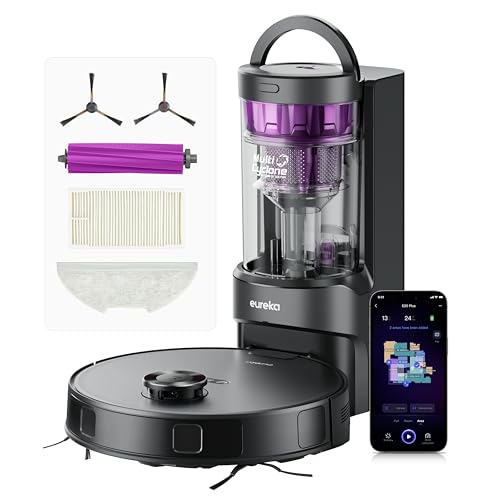

Shark PowerDetect Robot Vacuum
Shark
- 5x PowerDetect cleaning technologies
- 60-day self-emptying capacity
- 3D LiDAR navigation mapping
- Sonic mopping with pad washing
- NeverStuck threshold climbing technology
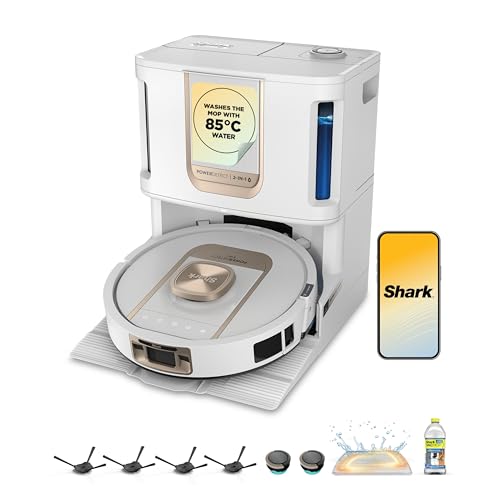
Shark ThermaCharged PowerDetect Robot Vacuum
Shark
- Heated mop cleaning base
- Dirt detect technology
- Edge cleaning extension
- Three hour battery life
- Auto water tank refill

Narwal Freo X Plus Robot Vacuum And Mop (White)
Narwal
- 7800Pa powerful suction
- Seven weeks dust storage
- Zero tangle brush design
- Self-emptying dustbin technology
- Tri-laser obstacle avoidance

Dreame X50 Ultra
Dreame
- 20,000Pa Vormax suction power
- Retractable legs climb 2.36in
- VersaLift lowers to 3.5in
- DuoBrush anti-tangle system
- Auto-empty self-cleaning base

Ecovacs Deebot X11 OmniCyclone
Ecovacs
- 19,500Pa BLAST suction power
- Bagless auto-empty station
- OZMO ROLLER 2.0 mopping
- PowerBoost 3-minute charging
- ZeroTangle anti-hair wrap

Dreame Robot vacuum cleaner with mop
Dreame
- 4000Pa powerful suction
- LiDAR navigation mapping
- 150 minute battery life
- 2-in-1 vacuum and mop
- App and Alexa control

Shark PowerDetect robot vacuum
Shark
- 30-day self-emptying base
- Vacuum and mop combo
- 3D LiDAR mapping
- Anti hair wrap technology
- App and voice control

Irobot Roomba j7
iRobot
- PrecisionVision obstacle avoidance
- 10x power-lifting suction
- Smart mapping technology
- Pet hair resistant brushes
- App and voice control

Irobot Roomba Combo 10 Max
iRobot
- 4-stage cleaning system
- AutoWash dock included
- SmartScrub mopping technology
- Auto-retract mop system
- Advanced obstacle avoidance
What makes the best robot vacuum and mop for pet hair?
Any robot vacuum can pick up crumbs. Pet hair is harder. It wraps around brushes, mats into carpet, drifts to the edges of rooms and fills a small robot vacuum bin in a single run. Add muddy paws, spilt water and the odd hairball, and the best robot vacuum for pet hair is one that vacuums and mops well, and keeps going without you pulling hair out of it every day.
After going through the specs of every model in this collection, these are the six features that matter most for dog and cat owners choosing the best robot vacuum and mop:
- A tangle-resistant main brush - rubber, split or "zero-tangle" designs instead of a bristle roll.
- Enough suction for carpet - pet hair sinks into pile, so carpet is where weak robot vacuums fail.
- A mop that lifts on rugs - so it can wipe paw prints on the kitchen floor without soaking the dog bed.
- Camera-based obstacle avoidance - to steer round toys, leads, bowls and, yes, accidents.
- A self-emptying dock - the bin on the machine is small; the dock bag or tank is not.
- Good filtration - fine dander matters as much as visible fur if anyone in the house has allergies.
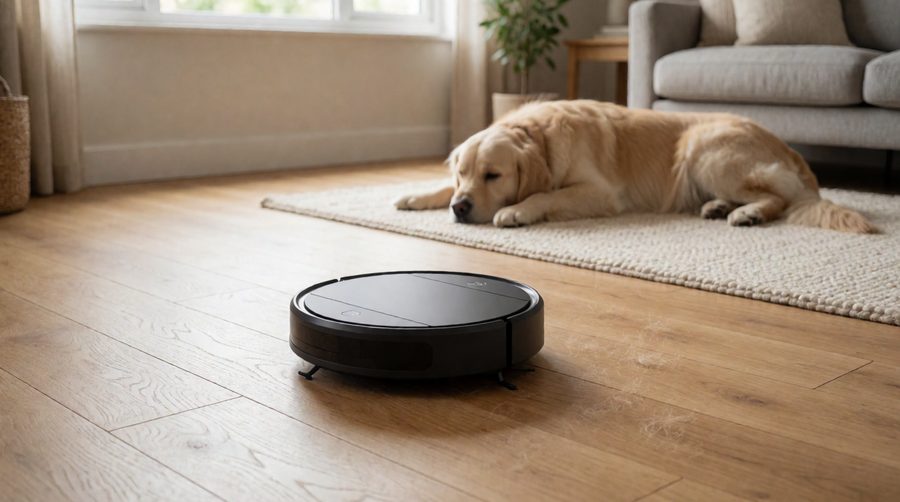
Anti-tangle brushes: the feature that matters most
Traditional bristle rollers act like a hairbrush. Long hair from a Collie, Husky or long-haired cat wraps round a bristle robot vacuum brush in a few runs, suction drops, and you end up cutting it free with scissors. Manufacturers now tackle this in different ways:
Rubber and V-shaped rollers
Fins of rubber flex against the floor and don't grip hair the way bristles do. The Eureka E20 Plus uses a V-shaped rubber roller that funnels fur to the middle, where the pet hair is sucked straight into the bin. The Lefant M5 Pro uses a similar V-shaped design.
Cutting and combing systems
Ecovacs' ZeroTangle (on the T30S, T50, T80 and X12 models) and Dreame's anti-tangle brushes add combs or blades that strip hair off the roller as it turns. Dreame quotes the X50 Ultra as handling hair up to 30cm long. Ecovacs lists a 0% tangle rate for the T50 Pro Omni; treat any "0%" as a lab figure, but these systems do cut the time you spend on brush clearing.
Side brushes
The spinning side brush is the other place hair collects. Look for a single-arm or rubber-tipped side brush, and check spares are easy to buy, because you will replace it more often with pets.

How much robot vacuum suction do you need for dog and cat hair?
Suction is quoted in pascals (Pa). Figures have climbed fast: the robot vacuums here run from 4,000 Pa on the Dreame D9 Max to 22,000 Pa on the Eureka J15 Max Ultra and Ecovacs Deebot X12 OmniCyclone. As a rough guide:
- Hard floors only, short-haired pet: 4,000-8,000 Pa is plenty; brush design matters more.
- Rugs and low-pile carpet: 8,000-15,000 Pa, with automatic carpet boost.
- Deep carpet with a heavy shedder: 15,000 Pa and up, ideally with a dual or tangle-free brush.
Pascal figures aren't measured the same way by every brand, so use them to compare within a price band, not as an absolute. Carpet boost, where the robot vacuum detects carpet and turns its power up automatically, is worth more day to day than a few thousand extra Pa. Our high suction robot mops and strong suction models rank by power if carpet is your priority.
Mopping up after pets
Pet hair isn't the only mess. Wet noses on patio doors, paw prints from the garden, splashes round the water bowl and drool all end up on hard floors. This is where a combined vacuum and mop earns its place over a vacuum-only robot.
Spinning pads vs roller mops
Most premium docks use two spinning pads pressed onto the floor. A newer option is the roller mop: a cylinder that is constantly rinsed with fresh water and scraped clean as it turns, so it never pushes dirty water around. The Ecovacs T80 Omni (OZMO Roller, 220 rpm), Deebot X12 models and Lefant M5 Pro (20cm roller) all work this way. Rollers suit kitchens and hallways where muddy paws track in. Shark's Stratos and PowerDetect use sonic mopping instead, vibrating the pad around 100 times a minute.
Mop lifting on rugs
If your dog's bed sits on a rug, you don't want a wet pad dragged across it. Look for automatic mop lifting (the Eureka E20 Plus lifts its pad 10mm) or pad removal at the dock. Shark calls this AutoLift.
Hot water washing
Pet mess leaves smelly pads. Docks that wash pads in hot water and dry them with warm air stop that. The Eureka J15 Max Ultra washes at 80°C, the Ecovacs T50 and T80 and the Lefant at 75°C, and the T30S at 70°C. More on this in our hot water robot vacuum mops and self-cleaning robot mops.

Obstacle avoidance: toys, leads and accidents
Pet homes are messy at floor level: chews, balls, food bowls, leads and the occasional accident. Basic robot vacuum bump sensors and lasers find walls and furniture but not small, soft objects on the floor. A camera-based system recognises them and steers round. Look for "AI camera", "3D structured light" or a named system such as Ecovacs AIVI 3D, Eureka DuoDetect or Roomba PrecisionVision. The Eureka J15 Max Ultra says it recognises 150+ object types; the Ecovacs T80 Omni lists 100+.
No system is perfect, so if your puppy is still house-training, schedule runs for after you've checked the floor. Browse our obstacle avoidance robot mops for the models that do this best.
Self-emptying docks save you from the pet hair
The bin on board a robot vacuum holds roughly 400-600ml (the Roomba j7 400ml, the Dreame D9 Max 570ml). In a moulting week a Labrador can fill that in one or two rooms. A self-emptying dock sucks the bin out after every run into a bag or tank of 2.5-4 litres. Brands quote 45 days (Eureka E20 Plus), 60 days (Shark PowerDetect, Proscenic Q8 Max+) and up to 120 days (Dreame D20 Air Plus, Lefant M5 Pro) between emptying. Expect less with heavy shedders.
Bagged docks seal the hair and dander away, which suits allergy sufferers. Bagless docks save on bags but mean tipping a dusty tank out. See our self emptying robot mops and bagless robot vacuum mops to compare.
Filtration and pet allergies
Allergies are usually triggered not by the hair itself but by dander - tiny flakes of skin - along with saliva and urine proteins. The NHS advice on allergic rhinitis recommends using a vacuum with a HEPA filter, washing pet bedding on a hot wash and keeping pets out of bedrooms. A HEPA filter traps particles down to 0.3 microns; the Shark Matrix Plus quotes 99.97% at that size, and several Shark and iRobot machines here use HEPA filters. Allergy UK also has practical advice on living with a pet allergy.
A sealed, bagged dock helps too, so you aren't releasing a cloud of dander when you empty it. And running the robot vacuum daily while you're out means less allergen settles in the first place.
Best robot vacuum mops for pet hair compared
All of these are in this collection and in stock on Amazon UK at the time of writing. Figures are from each listing.
| Model | Suction | Hair system | Mop | Dock / bin | Run time |
|---|---|---|---|---|---|
| Eureka J15 Max Ultra | 22,000 Pa | - | Pads, 8N pressure, 80°C wash | 4L bag | Up to 360 min |
| Ecovacs Deebot X12 OmniCyclone | 22,000 Pa | ZeroTangle 4.0 | OZMO Roller 3.0 | Bagless station | 200 min |
| Dreame X50 Ultra | 20,000 Pa | Handles hair up to 30cm | Spinning pads | Bagged dock | 180 min |
| Dreame D20 Air Plus | 20,000 Pa | Dual anti-tangle brush | Water tank, adjustable flow | 4L bag, up to 120 days | 180 min |
| Ecovacs Deebot T80 Omni | 18,000 Pa | ZeroTangle 3.0 | OZMO Roller, 220 rpm, 75°C wash | Self-emptying | - |
| Lefant M5 Pro | 18,000 Pa | V-shaped zero-tangle brush | 20cm roller, 75°C wash | Up to 120 days | Up to 320 min (vacuum) |
| Ecovacs Deebot T50 Pro Omni | 15,000 Pa | ZeroTangle 2.0 | Pads, 75°C wash | Self-emptying | - |
| Ecovacs Deebot T30S Pro | 11,000 Pa | ZeroTangle, pet detection | Pads, 70°C wash | Self-emptying | 180 min |
| Eureka E20 Plus | 8,000 Pa | V-shaped rubber roller | Pad, 10mm lift | Up to 45 days | 180 min |
| Proscenic Q8 Max+ | 8,000 Pa | Tangle-free suction | Pad, lifts on carpet | 3L bag, 60 days | 200 min |
| Shark PowerDetect (60-day) | - | Anti hair wrap | Sonic mopping, pad washing | Up to 60 days | 110 min |
| Dreame D9 Max | 4,000 Pa | Standard brush | 270ml water tank | 570ml bin, no dock | 150 min |
A dash means the listing doesn't give that figure. Shark doesn't publish Pa ratings.
The best robot vacuum and mop for your home
Best for long-haired dogs and cats on carpet
Go for 18,000 Pa or more and a dedicated anti-tangle system: the Ecovacs X12 OmniCyclone, Dreame X50 Ultra or Ecovacs T80 Omni. The Eureka J15 Max Ultra matches them on power and adds a bigger 4 litre bag. The X50 is also the one to pick if you have tall door thresholds - it can climb obstacles up to 6cm. Our threshold climbing robot mops list others.
Best for hard floors and muddy paws
A roller mop is the standout here. The Lefant M5 Pro and Ecovacs T80 Omni keep rinsing the roller as they go, so mud doesn't get smeared about. See our robot mops for hard floors for more.
Best for short-haired pets on a budget
The Eureka E20 Plus (8,000 Pa, rubber roller, self-emptying) and Proscenic Q8 Max+ handle short pet hair well for much less. For more, browse our budget robot mops.
Best for nervous pets
Some dogs bark at or chase the robot. A quieter model, scheduled while you're out at first, helps them get used to it. The Dreame D9 Max is rated at 55 dB and the Shark PowerDetect at 55-60 dB while cleaning (its dock is louder, 70-75 dB, for a few seconds when emptying). Our quiet robot vacuums and mops are worth a look.

How often should you run it?
Match the schedule to your pet's coat. The PDSA grooming guide says long-haired breeds such as Bearded Collies need brushing every day, medium coats such as German Shepherds a few times a week, and short coats like Labradors about once a week. Hair on the floor follows the same pattern, and most dogs moult more heavily in spring and autumn.
- Long coat or double coat: vacuum daily, mop two or three times a week.
- Medium coat: vacuum every other day, more in moulting season.
- Short coat or one cat: two or three runs a week, plus spot cleans of the kitchen.
Use zone cleaning in the app to run the hallway and back door area every day, and the whole house less often. Brushing your pet outdoors also cuts the hair the robot vacuum has to deal with.

Looking after a robot vacuum in a pet home
- Brush roll: check it weekly, even on anti-tangle models. Clear any hair at the ends where it gathers.
- Side brush: pull out wrapped hair and replace it when the bristles splay.
- Filter: tap it out weekly and replace every few months. If someone in the house has a pet allergy, let someone else do this, outdoors.
- Dock bag: change it when the app says, not when it's overflowing; bags in pet homes fill faster than the quoted days.
- Sensors and camera: wipe them with a dry cloth, as pet hair and nose prints stop them seeing obstacles.
- Mop pads: if your dock doesn't wash them in hot water, put them through the washing machine once a week.
Frequently asked questions
Is a robot vacuum and mop worth it if you have pets?
For most pet owners, yes. The biggest benefit is frequency: a robot vacuum that runs every day stops pet hair building up, so it never gets to the clumps-in-the-corners stage. You will still need a handheld or upright for stairs, sofas and the car.
Does pet hair get stuck in robot vacuums?
On older bristle rollers, yes, especially long hair. Rubber rollers and anti-tangle systems such as Ecovacs ZeroTangle and Shark's anti hair wrap brushroll cut this a lot, but checking the brush once a week is still a good habit.
Can a robot vacuum avoid dog poo?
Models with an AI camera are trained to recognise pet waste and steer round it, and some brands have offered guarantees on this in the past. Bump-only and laser-only models can't see it, so with a puppy or an older dog it's safer to pick a camera model and check the floor before a scheduled run.
Will a robot vacuum scare my dog or cat?
Some pets are wary of a robot vacuum at first. Run it while you're home to start with so they can watch it, keep the volume low and give treats. Most get used to it within a week or two, and many end up ignoring it.
Can it clean up cat litter?
Yes, scattered litter around the tray is one of the most useful jobs it can do, as long as it's dry. Clumped or wet litter can clog the brush and mop, so set a no-mop zone round the tray.
Which is better for pet hair: a vacuum-only robot or a vacuum and mop?
If you have carpet throughout, a vacuum-only robot does the main pet hair job. If you have hard floors in the kitchen, hall or dining room, a combined model also takes care of paw prints and drool, which is why most pet owners end up preferring one.