

Refine
Sort by
Base station
Suction power
Navigation
Battery life
Smart features
Colour
Brand
Customer rating
More like this


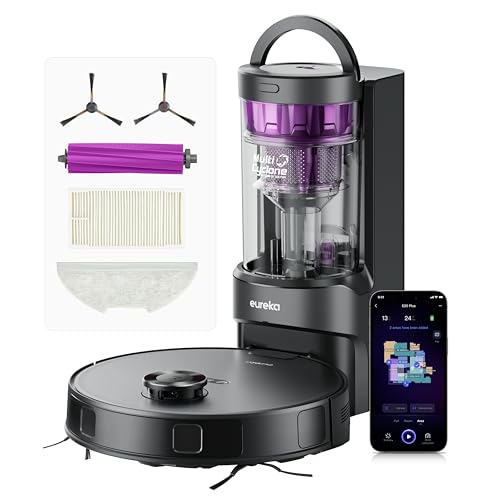
Eureka E20 Plus Robot Vacuum Cleaner (Black, 35cm x 35cm)
Eureka
- 8000Pa powerful suction
- 45-day self-emptying station
- 10mm mop lifting
- 180-minute battery life
- AI obstacle avoidance

Proscenic Q8 Max Robot Vacuum Mop
Proscenic
- Self-emptying station included
- 6000Pa powerful suction
- 200 minute battery life
- 360° LiDAR navigation
- App and voice control
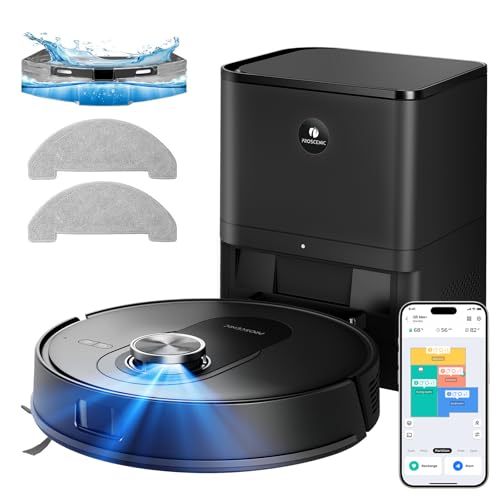
Proscenic Q8 Max+ Robot Vacuum And Mop (Black)
Proscenic
- 8000 Pa powerful suction
- Self-emptying 60 days
- 360° LiDAR navigation
- Vacuum and mop combo
- 200 minute battery life

Lefant Lefant M2 Plus Robot Vacuum
Lefant
- 6000Pa powerful suction
- Self-emptying station included
- LiDAR navigation mapping
- 2-in-1 vacuum and mop
- 140 minute battery life

Seafront Mini Smart Sweeping Robot (Black, USB Charging)
Seafront
- USB charging capability
- Automatic obstacle avoidance
- Multi filtration system
- Hard floor cleaning
- Compact 18cm design
What makes a robot vacuum mop "small"?
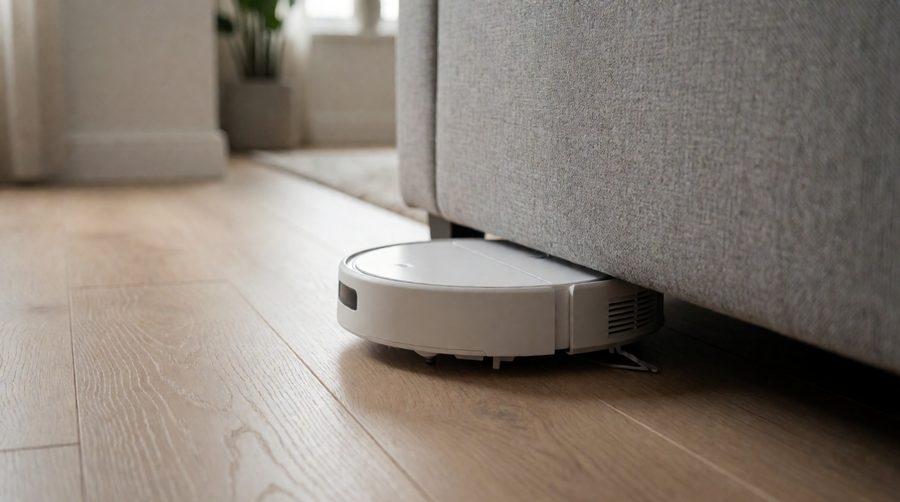
There is no official size class, so retailers use "small", "mini", "slim" and "compact" for quite different machines. It helps to split it into three measurements, because a robot can be tiny on one and ordinary on the others.
- Height - decides whether it fits under your sofa, bed or kitchen plinth. Most robot vacuums sit around 9.5-10cm with their LiDAR turret. Slim models are 7.4-9cm.
- Width (diameter) - decides whether it can squeeze between chair legs, round a toilet or along a narrow hallway. The usual size is about 35cm; space-saving robots are 30-32cm and true minis can be 18-25cm.
- Dock footprint - the part people forget. An all-in-one station that empties, washes and dries can be as big as a bin, which matters more in a one-bedroom home than the robot itself.
The best small robot vacuum mops balance all three. A 32cm robot that is 9.5cm tall and docks into a slim base will usually suit a one or two-bedroom home better than a 35cm flagship with a giant tower.
Real sizes compared
These figures come from the product listings in this collection and from the makers' own spec sheets. Robot dimensions are the body only; where a listing gives the dock separately we say so.
| Model | W x D x H (cm) | Suction | Run time | Good to know |
|---|---|---|---|---|
| Seafront Mini Smart Sweeping Robot | 18 x 18 x 6 cm | 4W motor | 20 min | USB charged, no dock, hard floors only |
| Roomba Mini (iRobot) | 24.5 x 24.5 x 9.2 cm | Not given in Pa | Not given | 2kg robot; AutoEmpty dock 21.2 x 17.8 x 28.5cm |
| Kilgone G20 | 30 x 30 x 7.4 cm | Not stated | 100 min | No LiDAR turret, 230ml water tank |
| Lefant M2 Plus | 32 x 32 x 9.5 cm | 6000Pa | 140 min | 300ml water tank, 40-day self-emptying base |
| Proscenic Q8 Max | 32 x 32 x 9.7 cm | 6000Pa | 200 min | 64dB, 600ml dustbin, 5 floor maps |
| Proscenic Q8 Max+ | 32 x 32 x 9.7 cm | 8000Pa | 200 min | 3 litre dust bag in the base, about 60 days |
| Eufy Omni C20 | 33 x 28.9 x 8.5 cm | 7000Pa | Not stated | Station empties, washes and dries the mops |
| Eureka E20 Plus | 35 x 35 x 9.7 cm | 8000Pa | 180 min | Climbs 20mm thresholds, mop lifts 10mm |
| Kärcher RCV 5 | 35 x 35 x 9.7 cm | 5000Pa | 120 min | 240ml water tank, 66dB, 20mm thresholds |
Two things stand out. First, height and width don't always go together: the Eureka E20 Plus and Kärcher RCV 5 are full-width but no taller than the 32cm Proscenic. Second, the slimmest machines get there by dropping or hiding the laser turret - the Kilgone G20 uses 360-degree sensors instead, while the Roborock Saros 10 lowers its LiDAR when it meets a tight gap.
How to measure your home before you buy
Five minutes with a tape measure saves a return. Do this before comparing models:
- Measure under your lowest furniture. Slide the tape under the sofa, bed and sideboard and note the lowest clearance. Measure at the front edge and further back - many sofas dip in the middle.
- Allow about 1cm spare. A robot that is exactly the same height as the gap will wedge itself. If your sofa gives you 10cm, look for a robot of 9cm or less.
- Measure the narrowest gaps. Chair legs under a dining table, the space beside the toilet, the gap between a bed and a wardrobe. If it is under 33cm, a 30-32cm robot will reach places a 35cm model can't.
- Find a home for the dock. Every dock needs a socket and some clear floor in front and to each side so the robot can line up - the manual gives the exact space. Measure that spot before you choose a big all-in-one station.
- Check your thresholds. Slimmer robots often climb less. If you have raised door bars or thick rugs, look at the climbing height, or browse our robot vacuums that climb thresholds.
Small robot vacuum mops: the trade-offs
Going smaller isn't free. Knowing where the compromises fall helps you pick the right size rather than simply the smallest one.
Smaller bins and water tanks
Less body means less room for dust and water. A 230ml or 240ml tank is common on slim robots; a mid-size Dreame D9 Max carries 270ml and its 570ml dustbin is far larger than a mini's. In practice you refill more often, so in a home with several rooms a self-emptying base earns its keep. Our self-emptying robot mops pair space-saving robots with bases that hold weeks of debris.
Battery and run time
The 32cm robots haven't lost much here - the Proscenic Q8 Max runs up to 200 minutes and the Lefant M2 Plus up to 140. The real drop comes with USB minis: the Seafront's 300mAh cell gives about 20 minutes. The listed runtime is on the lowest suction setting, so expect less with carpet boost on. If you want one charge to cover the whole home, see our long battery life robot vacuum mops.
Suction
Suction power is quoted in pascals (Pa). Robots of this size with 6000-8000Pa of suction power match many standard-size models, so a smaller body doesn't automatically mean weaker cleaning on hard floors. Deep carpets and lots of pet hair are where flagships with 10,000Pa-plus and rubber rollers pull ahead - our robot vacuums for pet hair are built for that.
Navigation
Laser navigation maps rooms quickly and accurately, but the turret adds height. Models without one (gyro or sensor navigation) are slimmer and usually cheaper, but they clean in less tidy patterns and can't always offer room-by-room cleaning or no-go zones in the app. If accurate maps matter to you, go for a slim LiDAR model rather than no LiDAR - see our robot vacuum and mop with mapping.
Brush rolls and rollers
Rubber rollers, like the V-shaped rubber roller on the Eureka E20 Plus and the rubber brush on the Roomba 505 Combo, tangle less with hair than bristle rollers and are quicker to clean. Roller mops - a spinning roller washed as it mops, such as Kärcher's FC roller technology - are mostly found on bigger robots for now, so on a slim robot you'll usually get a mopping pad.
Which mopping system suits a smaller robot?
Most slim robots mop with a pad dragged behind the robot, with water fed from an on-board tank. It's light and keeps the body slim, and it's fine for daily crumbs and footprints on tile, vinyl and sealed wood. Some add vibration - the Kilgone G20 has a vibrating mop - which helps with light marks.
Rotating twin pads and roller mops press harder and shift dried-on spills better, but need more space and power, so they're mostly found on larger models and on stations that wash the pads for you. The Eufy Omni C20 is one of the few slim robots with a full washing and drying station.
Whichever type you choose, look for mop lifting (the Eureka E20 Plus raises its pad by 10mm) or carpet detection so rugs don't get soaked. The Roomba Mini avoids rugs automatically while mopping and uses disposable mopping pads, so there's no dirty water to tip away. For flooring advice, see robot mops for tile floors and robot mops for hard floors.
Docks and stations for small spaces
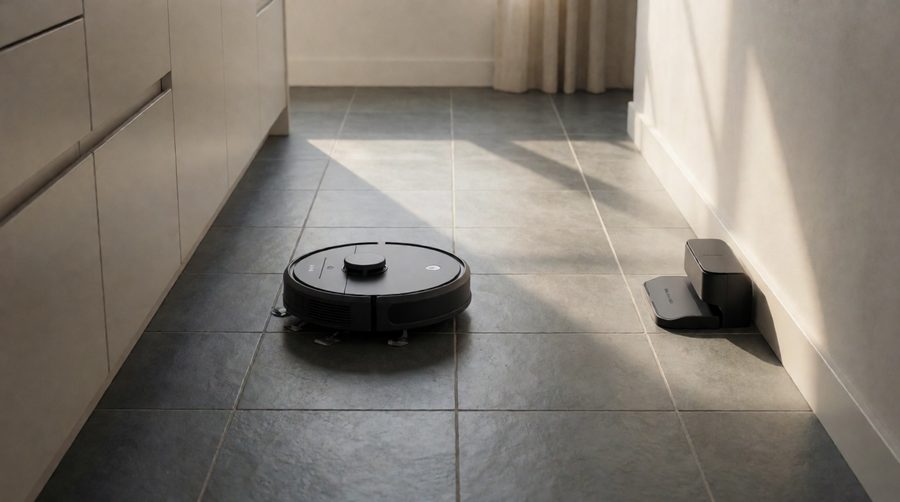
In a smaller home, the dock is often the deciding factor. There are three broad types:
- Charging-only dock - the smallest option, about the size of a hardback book stood on end. You empty the robot's bin and fill its tank by hand.
- Self-emptying base - sucks the dust into a bag in the base. The Proscenic Q8 Max+ base holds about 60 days of dust in a 3 litre bag. Taller, but a narrow footprint.
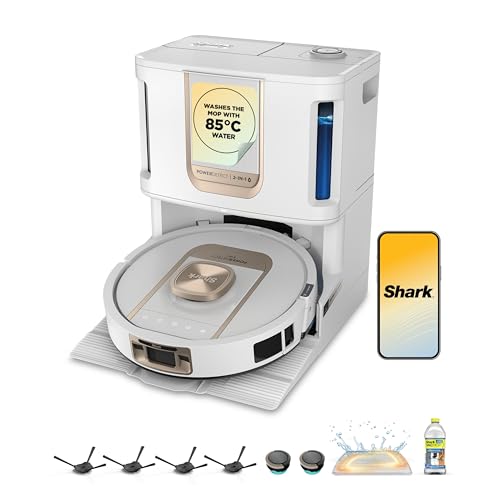
- All-in-one station - empties, washes and dries the mop and refills the water. The most hands-off, and the biggest. A full-size Shark PowerDetect robot and base together measure 36.4 x 47.8 x 44.6cm.
iRobot says the Roomba Mini and its AutoEmpty dock take up 33% less floor space than its Roomba 105 and dock, and the Roomba Mini spec sheet lists the dock at 21.2 x 17.8 x 28.5cm. That's the size to aim for if floor space is tight.
Who should buy a small robot vacuum and mop?
Studio and one-bedroom flats
A 30-32cm 2-in-1 robot vacuum and mop combo with a slim dock covers a one-bedroom home comfortably on one charge, and you won't need a big station in the hallway.
Low beds and sofas
If dust gathers under furniture you can't easily move, height is the measurement that matters most. Look at 9cm and under.
Busy, cluttered rooms
Children's bedrooms, home offices and dining rooms full of chair legs suit a 30-32cm robot, ideally with good obstacle avoidance - see our obstacle avoidance robot vacuums.
Light sleepers and home workers
Smaller robots aren't automatically quieter - the Proscenic Q8 Max is rated at 64dB and the Kärcher RCV 5 at 66dB. If noise matters, compare decibel ratings or browse our quiet robot vacuum and mops.
Bigger homes
A smaller robot will still clean a three or four-bedroom house, but you'll empty and refill it more often. Weigh that against an under-furniture reach you may only need in one or two rooms.
Brands with slim and space-saving models
iRobot Roomba
The Roomba Mini is iRobot's smallest 2-in-1 robot vacuum and mop: 24.5cm across, 9.2cm tall and 2kg. Its ClearView LiDAR maps a 93m2 home in under 10 minutes, it self-empties into a sealed bag that only needs changing about four times a year, and it mops with disposable pads. You can start it with one button and no Wi-Fi, or use the Roomba Home app, Alexa, Siri or Google Assistant. If you'd rather have a full-size Roomba, our Roomba vacuum and mop collection includes the Roomba 505 Combo with its 75-day auto-empty base.
Roborock
Roborock has the lowest LiDAR robots we know of. The Saros 10 is 7.98cm tall because its LiDAR retracts, and the Saros 10R reaches the same height with a solid-state sensor and no turret at all. Both are premium models. Most other Roborock robots, such as the Q10 S5+ in our feed, are standard 35cm machines.
Eufy
The Eufy Omni C20 is 8.5cm tall with 7000Pa suction, a roller brush and side brush, and rotating mop pads that turn at 180rpm with 6N of pressure. Its station empties the dustbin, washes and dries the mops and refills the water tank - unusual at this height.
Dreame
Dreame's D9 Max is standard width (35cm) but only 9.6cm tall, with 4000Pa suction, 150 minutes of runtime and a 55dB noise rating - one of the quieter robots on the site. Most newer Dreame robots have big all-in-one stations, so check the station size as well as the robot.
Shark
Shark's PowerDetect robots are aimed at larger homes. The robot and self-emptying base together measure 36.4 x 47.8 x 44.6cm, and the robot has 3D LiDAR navigation and 110 minutes per charge. Great if you have the space; see our Shark robot vacuum and mops.
Lefant, Proscenic and Eureka
These value brands make several of the 32cm models in this collection. The Lefant M2 Plus and Proscenic Q8 Max share a 32 x 32cm body under 10cm tall, and the Eureka E20 Plus is only 9.7cm tall with a V-shaped rubber roller.
Cleaning modes and app features worth having
Size aside, the app and cleaning settings decide how much work the robot saves you. Look for:
- A cleaning schedule - set it to run while you're out, so a slower small robot has all the time it needs.
- Room-by-room cleaning and no-go zones - needs a map, so usually LiDAR navigation. Handy for keeping it away from cables and pet bowls.
- Spot cleaning - sends the robot to one mess, such as crumbs under the kitchen table. The Roomba Mini offers it.
- Suction levels and carpet boost - the Lefant M2 Plus and Proscenic Q8 Max+ raise suction automatically on carpet; the Eureka E20 Plus has 3 suction levels.
- Water flow levels - the Lefant M2 Plus has 3, so you can mop laminate and wood floors with less water and tile with more.
- Edge cleaning - side brushes sweep dust out of corners. The Proscenic Q8 Max+ has dual side brushes.
- Obstacle avoidance - sensors that steer round shoes, socks and chair legs, which matters more in cluttered rooms.
Our picks from the collection
A few models worth a closer look, chosen on their size and real specs:
On a tighter budget? Our budget robot vacuum and mops include several space-saving 2-in-1 machines, and the cordless robot vacuum cleaners collection covers more battery-only designs.
Robot vacuum maintenance for smaller models
Smaller parts fill up faster, so regular maintenance keeps a slim robot vacuum cleaning well:
- After each mop - rinse or swap the mop pad and empty any water left in the tank so it doesn't smell.
- Weekly - empty the dustbin if there's no self-emptying base, cut hair off the brush and wipe the sensors and LiDAR window with a dry cloth.
- Monthly - tap out or replace the filter, check the side brush and clean the charging contacts on the robot and dock.
- Every few months - replace mop pads, filters and side brushes as the maker recommends. Replacement packs for popular models are easy to find on Amazon.
Use only the cleaning solution the manufacturer approves - many ask for plain water, and some solutions can damage the tank or void the warranty. When a robot reaches the end of its life, don't put it or its lithium-ion battery in the bin: Recycle Now shows where to take old electricals locally. Independent testing from Which? is also worth reading before you spend a lot.
Small robot vacuum mops FAQ
How small can a robot vacuum and mop be?
The smallest dockless minis are around 18cm across and 6cm tall, like the Seafront Mini. Among full-feature robots with a dock and app, 24.5cm (Roomba Mini) is about as narrow as it gets, and 7.4-8cm is about as low - the Kilgone G20 is 7.4cm and the Roborock Saros 10 is 7.98cm.
How much clearance does a robot vacuum need?
Measure under your furniture and allow about 1cm more than the robot's height. A 9.5cm robot needs a gap of roughly 10.5cm to move freely without wedging.
Do smaller robot vacuums have less suction?
Not necessarily. The 32cm models in this collection quote 6000-8000Pa, the same as many standard-size robots. The big step down is the tiny USB minis, which use very low-power motors.
Are mini robot vacuums any good?
The USB-powered minis are fine for a desk, a bathroom or a single hard-floored room, but with around 20 minutes of run time and no mapping they won't replace a proper robot. For a whole home, choose a 30-32cm robot vacuum and mop combo with a dock.
Can a slim robot mop handle carpets?
It will vacuum low-pile carpet and rugs. For mopping, choose one that lifts the mop or detects carpet so rugs stay dry, such as the Eureka E20 Plus or Proscenic Q8 Max+.
Do small robot vacuums work with Alexa?
Most app-connected ones do. The Lefant M2 Plus works with Alexa and Google Assistant, and the Proscenic Q8 Max+ adds Siri and IFTTT. The USB minis are button-only.